
Who Gets to Be a Champion: Racism & Colonial Bias in FIFA
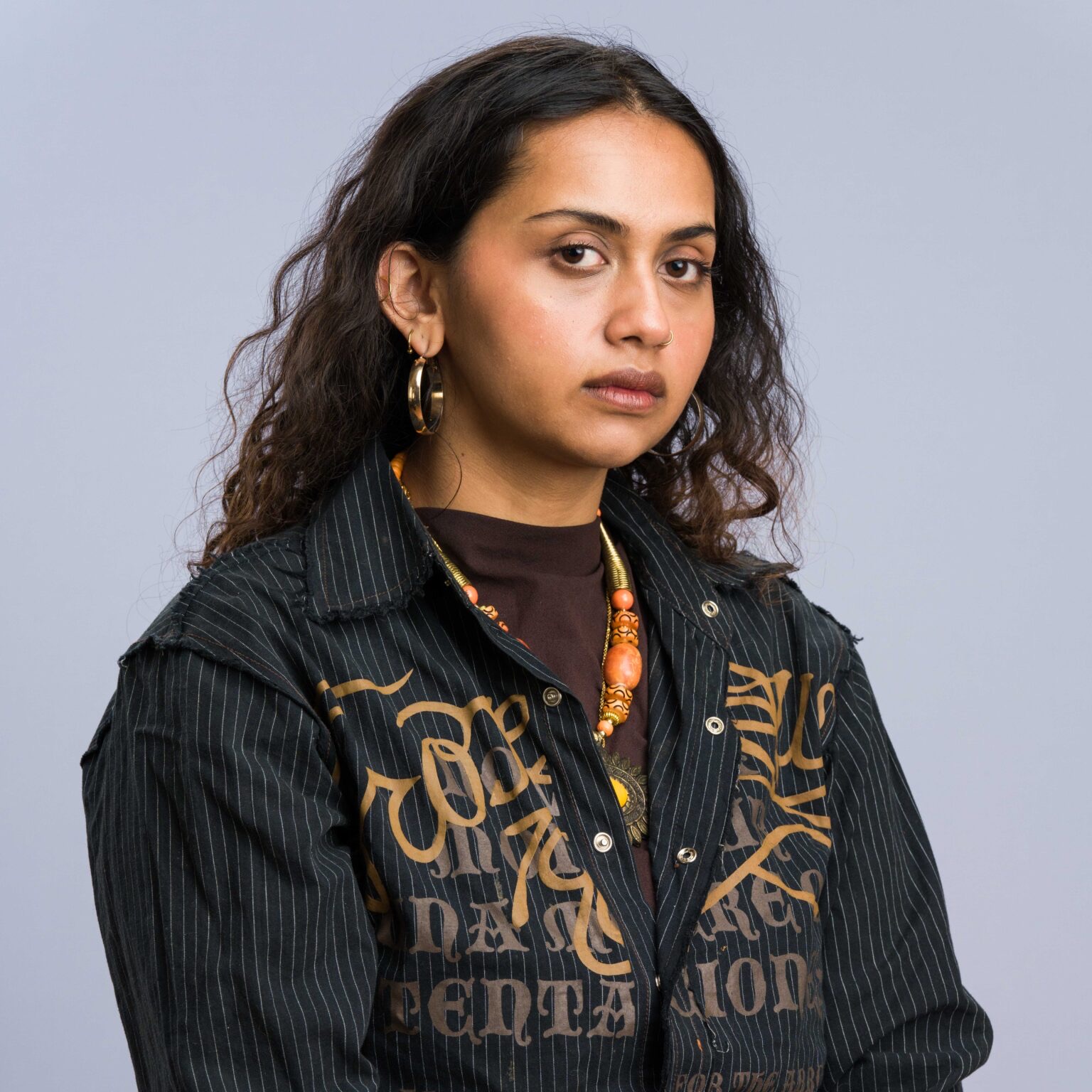
by Sylphia Basak for The 44 North, Contributing Writer - Politics

Editor's Note:
The following article reflects the views & analysis of the author. As with all opinion and essay submissions, the piece has been edited for clarity and reviewed carefully for factual accuracy, but the interpretations & arguments are the author’s own. The 44 North publishes an array of perspectives & voices to encourage and ensure thoughtful engagement with complex social, political, historical, and cultural issues.
"And perhaps the microcosm of FIFA acts as a stand-in for the political climate, where we're still rooting for the underdog to win against evil, against the impossible odds."
To so many around the world, the beauty of football (soccer) is its democracy. From the grass fields of England to the barrios of Brazil and the sandy back alleys of Morocco, the simplicity in its setup—a ball, an open patch of land, and two markers for goals—allows it to be a meritocratic sport where anyone can find themselves on the world’s stage, regardless of country, race, or class. Seemingly, the only prerequisites are hard work and perhaps a touch of talent. The unparalleled accessibility for both players and spectators has arguably made soccer one of, if not the, most universal sports, gathering billions of players and adoring fans in parks and stadiums across the globe. At the peak of FIFA 2026, there’s an undeniable sense of unity and community ritual as bars draw crowds that spill onto the street. Everyone seems to be in a flurry of doom and uncertainty: For a few months, they believe that their team—and by extension themselves, the underdog—can win in a world that feels like a magnet for loss.
But how does that cultural and democratic ideal hold up within the institution of the sport?
FIFA, the Fédération Internationale de Football Association, has served as the global governing body for football since 1904. As described by one Reddit user, FIFA is essentially “the UN of football”—a unifying council designed for nations to confer with one another beyond the nitty-gritty of bi-partisan politics.
FIFA’s statutes explicitly state that the soccer governing body must remain “neutral in matters of politics and religion.” However, the 2026 World Cup series has proven itself inseparable from the social, political, and literal climate it’s operating under.
After Iran’s elimination from the first round of 48 countries, many have called out the treatment of the team, alleging that certain matches were rigged in order to eliminate them from the playoffs. Further, they’ve pointed out biased questions from the press and the circumstances within which they were allowed to play in the United States.
Several countries, including Iran, struggled to obtain the necessary visas to attend matches, both spectators and teams alike.
“We can’t wait to welcome soccer fans from all over the globe,” the U.S. State Department’s website reads, quoting President Donald Trump. However, the White House's rules on who can enter the country vary widely depending on the travellers’ country of origin. At least four competing countries—Haiti, Iran, the Ivory Coast, and Senegal—are subject to a full travel ban (which affects tourists but not players), and a handful of others must undergo heightened screening to enter the country (Council of Foreign Relations).
The compromise for the Iranian team was for them to stay in Tijuana, Mexico, while competing in their matches on U.S. soil. This meant a four-hour flight and TSA security protocol between each game, leaving them exhausted and lacking the presumably crucial rest and practice between matches. Despite this, Iran never lost a game. Having tied each, they were eliminated by the Algeria and Austria draw, which theorists on X point to being fixed. In the same vein, Muslim spectators in America were harassed and assaulted, including women having their hijabs torn off, according to Novara Media.
Following the matches, press conferences also seemed to veer into politics for players and coaching staff of the Global South. Such was the case when a reporter asked the Iranian captain directly about their views on LGBTQ+ rights (a tactic known as ‘pinkwashing,’ wherein queer or women’s rights and lack thereof are used to propagate Western hegemony and justify foreign intervention in the Global South). The assumption—that many speculate the (American) reporter was making by asking the Iranian captain his views on LGBTQ+ rights—was that he would provide an incendiary (negative) opinion which could then be used to delegitimize a favourable view of Iran or the Iranian people, while the American team, and by extension, America, would be positioned as the morally superior of the two nations. The Iranian captain gave a heartwarming response regarding his and his team’s acceptance of all, alongside a reminder of why they were there: To play football. While reassuring to hear the Iranian teams’ welcoming attitudes toward Queer people, many have rightfully pointed out the blatant double standard in this line of questioning;

Not only is this line of questioning a violation of FIFA’s “apolitical” policy, but an argument could be made that it should be extended to all nations, including and perhaps especially America, as one of this year’s FIFA hosts. Why should one team be questioned on the state of human rights in their country while the American team hasn’t been questioned about their views on the Trump administration’s deployment of ICE in civilian communities, alongside its rollbacks on LGBTQ+ rights and protections?
Of course, the FIFA World Cup is unfolding amid the US/Israeli war on Iran, as well as Israel’s continued genocide and ethnic cleansing campaigns in Palestine and Lebanon, largely funded by the United States. America was still allowed to host, and Israel, though not securing a playoff spot, was still allowed into FIFA stadiums, while the Russian team has been banned since 2022, citing Russian leader Vladimir Putin’s war crimes in Ukraine. Despite arrest warrants via the International Criminal Court (ICC) for both Putin and Israel’s leader, Benjamin Netanyahu, only one nation remains banned from FIFA.
In the wake of Cape Verde and Egypt’s losses against Argentina, discourse has arisen online regarding seemingly biased treatment toward the Argentinian team, resulting in a deliberate reconfiguring of rules to give them an advantage on the field. In a video circulating online, there appear to be multiple instances of the Argentinian team flouting rules and injuring their opponents, which were ignored by the referee. There have been extensive efforts to remove this video from social media, which has been cited as further evidence of more institutional bias.

Legacy news outlets such as BBC and TSN have reported these losses as “bad luck,” however, to many, it has become increasingly hard to ignore the glaring disparities in how certain teams have been treated, and the deliberate-seeming attempts at ensuring Africa and West Asia didn’t have a chance at playing in the finals, regardless of talent.
Even before entering the field, Haiti had also experienced discrimination; FIFA banned their initial jersey design, citing their increasingly selective “political” label. While FIFA didn't elaborate on which components of the jersey were deemed problematic, the issue almost certainly stemmed from the small image of a group of people holding the Haitian flag that appeared on the right hip of the jersey. A spokesperson for the team confirmed an image depicting the Battle of Vertières and independence heroes raising the Haitian flag, commemorating the Haitian revolt against slavery, apparently “too political” for FIFA (The Conversation).

This year’s FIFA World Cup, more so than other years in recent memory, has put on the global stage the financial and social disparities between European and North American teams and teams from the Global South. Undoubtedly, the significant sponsorships that Western teams are often more privy to greatly support their athletic performance. Coupled with likely favour from FIFA, it has become clear to many that not all nations are given the same starting line, and that this may be more deliberate than we as spectators have been led to believe. The Global South is once again in a position of playing socioeconomic matches before they even step on tournament turf, while Western teams are not only uplifted by sponsorships but, alongside their fans, act as though their success rate is a matter of talent, meritocracy, and superiority. As one X user says;

FIFA, like all global institutions, cannot be exempt from the climate in which they exist. Apoliticism in the context of active genocides amounts to tone-deaf complicity and ignorance, and it becomes particularly insidious when covert colonial ideology seeps into institutions like FIFA via their treatment of people who fall outside of Western hegemony.
As spectators, we must reckon with yet another form of reappropriating liberal ideals of diversity and unity to essentially minimize and obfuscate the current reality of imperialism manifesting itself, even within the game.
So who gets to be a champion?
Such is the ask of any institution under capitalism. The essence of sport and art—and why we feel drawn to watching the greats and rooting for unexpected underdogs—is degraded when they’re married to systems rooted in the oppression of others. Ultimately, there’s no way for those systems to avoid absorbing the manifestations of colonialism, racism, sexism, etc., because these are the foundations on which many institutions—even beloved cultural icons such as FIFA—have been built upon. Diversity within these structures can then easily become another form of tokenism. Despite this, the talent of athletes in the global south shines through and holds its own against bias from the top down. And perhaps the microcosm of FIFA acts as a stand-in for the political climate, where we're still rooting for the underdog to win against evil, against the impossible odds.

Sylphia Basak is a journalist/writer and activist who uses a variety of mediums to convey the story she wants to tell. Her work prioritizes a decolonial lens, and seeks to counteract and analyze Western media and culture as a way of highlighting the primary contradictions of the current political climate.


Comments