top of page

by Hanna Grover ​for The 44 North, Guest Writer


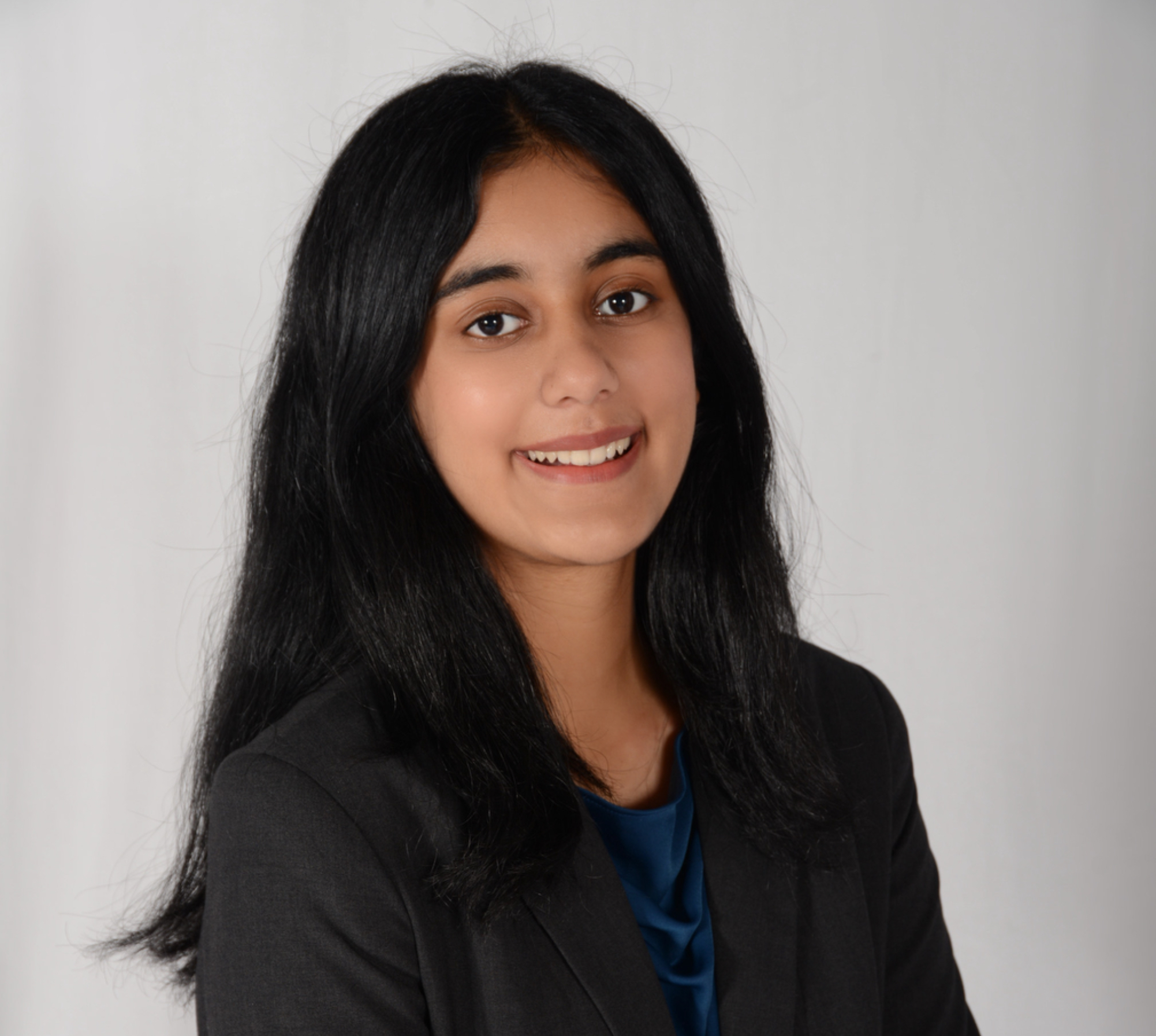
Hanna at a speaking engagement, wearing a black striped blazer. Via Hanna Grover.

“In these conditions, poetry becomes more than a form of art. A poem can hold grief without trying to solve it. It can preserve joy in fleeting moments. It can transform isolation into resonance, allowing someone to read a line written by a stranger and think, Someone else has felt this too.

Poetry is one of humanity’s oldest forms of storytelling, and today, it feels more necessary than ever. In a world saturated with headlines, algorithms, and rapid consumption, humans barely have enough moments long enough to feel. 


For many young people, poetry has become a language for emotions that are otherwise difficult to articulate. We’re growing up in an era shaped by uncertainty alongside rising rates of anxiety and burnout, increasing loneliness despite digital connection, and a globe where many youth feel pressured to mask themselves. In these conditions, poetry becomes more than a form of art. A poem can hold grief without trying to solve it. It can preserve joy in fleeting moments. It can transform isolation into resonance, allowing someone to read a line written by a stranger and think, Someone else has felt this too. That moment of resonance is powerful because it reminds us we are not alone. Youth are craving spaces where they can be authentic together as a collective without fear of judgment. And while social media evidently encourages curated identities and constant comparison, poetry invites people to speak honestly. 


Hanna receiving a regional health & wellbeing award for Poet2Poet from Ingenious+. Via Hanna Grover.

I’ve witnessed this firsthand through my work founding and spearheading Poet2Poet, a youth organization focused on enacting poetry to battle the youth mental health crisis and create connection. Through workshops, open submissions, and community initiatives, Poet2Poet was built around a belief that creative expression can foster emotional connection and empower youth voices. What began as a platform for young poets gradually became an international global community where youth across the world could share their stories and engage in health and wellbeing programming through poetry. Poet2Poet has published over three hundred poems from young writers around the world, each carrying a different perspective but united by the same desire to be heard. Moreover, Poet2Poet focuses on delivering opportunities to promote youth health and wellbeing through poetry by running free in-person and virtual writing workshops for youth. Our most recent workshop for National Poetry Month, Waves and Words, was a collaboration with Unsinkable, one of Canada’s largest storytelling-focused youth mental health charities, designed for youth aged 16-25 in Canada, in person and virtually. After weeks of planning with the amazing Unsinkable team, Waves and Words was created to intentionally provide a space where youth used writing and poetry to explore emotional wellbeing, identity, and healing. The entire event felt surreal, but what struck me most was how people who entered the room as strangers left feeling connected through shared vulnerability. At that moment, it was clear that the beauty of poetry is how it transcends barriers. No one needs formal training, expensive resources, or a perfect understanding of literary devices to write a meaningful poem. Poetry is accessible because it begins with honesty and an inherent creative freedom to experiment with language on the page, and that’s exactly what was seen during the workshop. 


The banner for Hanna’s "Waves & Words" workshop

Hanna at a workshop, connecting with writers using paper & markers. Via Hanna Grover.

My journey in building Poet2Poet has always demonstrated how poetry can function as a form of care. Unlike many conversations around mental health that often focus only on diagnosis or intervention, poetry allows people to process emotions and deal with challenges in accessible human ways. It’s vital to have a daily outlet for your well-being, and in the case of Poet2Poet, a community that can support you. National Poetry Month further amplifies this idea by transforming poetry from an individual act in isolation into a collective, community movement. During National Poetry Month, poetry becomes visible in schools, libraries, communities, and online spaces. It encourages people who may never normally engage with poetry to pause and encounter it, regardless of whether they see themselves as a “writer”. It reminds us that everyone has a story worth telling. Every person carries experiences, memories, fears, and hopes that can resonate with others. 


At the end of the day, poetry matters now because humanity matters now. In a fast-moving world that can sometimes feel emotionally numbing, it’s clear that poetry helps people reconnect—with themselves and with one another—one line at a time.


Hanna Grover is a youth advocate, researcher, and public speaker driven by a commitment to health and wellbeing equity, children’s rights, and youth empowerment. Her journey began with a simple belief: that young people deserve a seat at every table where decisions about their wellbeing are made. Today, that belief shapes everything she does, from founding Poet2Poet, a youth-focused organization that merges poetry with mental health, to working with national health organizations to create more equitable healthcare systems. Through Poet2Poet, Hanna has helped thousands of youth across 70+ countries use writing as a tool for healing, connection, and advocacy. Alongside her many personal initiatives, she serves and collaborates with a range of organizations, advisory councils, academic teams, and advocacy platforms on projects that center youth voices for systems-level change. She has had the privilege of speaking at national conferences and panels, often serving as the youngest voice in rooms filled with fellow policymakers, researchers, and professionals with a hope to empower others like her. Her advocacy has been recognized through awards like Canada’s Top 10 Under 18 Changemakers, British Columbia's Medal of Good Citizenship, and Surrey’s Top 25 Under 25.
by Lillian Currie for The 44 North, Guest Writer


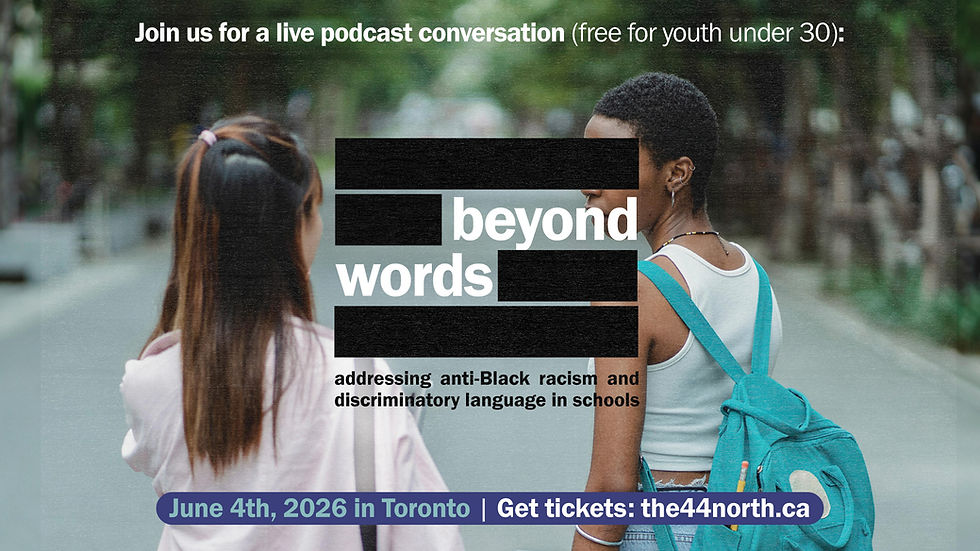
In partnership with Harmony Movement, University of Toronto Schools, and Unsinkable, our discussion will feature 4 panellists who will explore the role of language in both reinforcing harm & creating the conditions for more respectful, inclusive, and courageous school communities. Lillian’s essay is a special-edition feature in support of this event.
"Belonging is more than simply being allowed into a space. Belonging is knowing your humanity will be respected once you are there.

Language is often referred to as “just words.” But anyone who has ever walked into a classroom and suddenly felt smaller because of a joke, comment, nickname, or even silence knows that words are never just words.


Words shape how people are treated.

They shape who feels safe enough to speak.

They shape who is defended and who is left behind.


In schools, language quietly shapes the atmosphere. It can make a classroom feel welcoming, and just as easily make someone feel they’re only surviving the day instead of truly belonging there. One sentence can stay with a person long after the bell rings.


Anti-Black language in schools is not always obvious. Sometimes it’s a racial slur yelled across a hallway. Other times it hides behind “jokes,” stereotypes, or comments that people dismiss as harmless. It can sound like a surprise when someone tells a Black student, “Wow, you’re so articulate,” as if intelligence were unexpected. It can appear in assumptions about attitude, behaviour, or intelligence. It can appear when Black students are punished more harshly than others for the same actions. And sometimes, the most painful part is not what’s said, but what’s not said: The silence after racism happens—the silence that makes students feel completely alone.


That silence can hurt more than the words themselves.


People often think courage and vulnerability are opposites. Courage sounds fearless and strong, while vulnerability sounds exposed and uncertain. But when it comes to confronting anti-Black language in schools, the two are deeply connected. Real courage requires vulnerability. Speaking up means risking awkwardness, rejection, conflict, or isolation. It means saying something even when staying quiet would be easier. It means caring more about another person’s dignity than your own comfort.


For many Black students, vulnerability is not a choice. It happens the moment they walk into spaces where they feel pressured to monitor how they speak, act, or express themselves. There’s a constant awareness of how they might be perceived: “too loud,” “too angry,” “too intimidating,” or “too ghetto.” That pressure is exhausting. It means code-switching and rehearsing your tone before asking a question in class. It means wondering whether defending yourself will make you seem “aggressive.” It means hearing stereotypes repeated casually and then being told, “It’s not that serious,” when it hurts.


One of the hardest things about harmful language is how quickly people focus on intention instead of impact. Students excuse comments as “just jokes.” Teachers sometimes overlook harmful remarks because they were not “meant badly.” Friends defend each other by saying, “That’s just how they talk.” But words don’t stop hurting simply because someone claims they didn’t mean harm. Pain doesn’t disappear because the person who caused it was laughing.


One of the most dangerous things schools can do is allow harmful language to become normal. When anti-Black comments happen so often that people stop reacting, it sends a message. It tells Black students that their pain is something they’re expected to handle quietly. It teaches others that racism only matters when it’s ‘extreme enough’ to make national news.


But racism doesn’t start with headlines.

It starts with what people allow.


It starts when someone says the n-word and nobody corrects them.

It starts when Black hairstyles are labelled “unprofessional.”

It starts when Black students are punished for behaviours others are excused for.

It starts when teachers avoid conversations about race because they’re afraid of getting uncomfortable.

It starts when students decide silence feels safer than speaking up.


But silence is never neutral. Silence protects harm by allowing it to continue.


As someone who is white, I think it’s important to recognize that confronting anti-Black language cannot only fall on Black students or students of colour. Too often, the people most harmed by racism are also the ones expected to carry the full responsibility of addressing it. But white students, teachers, and community members should also carry responsibility to challenge anti-Black racism, especially in moments where silence feels easier. During my last years of middle school, I constantly overheard predominantly white peers calling their friends racist, stereotypical names like “monkey” or “gorilla” as a joke. At the time, I didn’t dare to say anything—I didn’t have the courage to. 


I still remember hearing the laughter surrounding those comments, and I feel uncomfortable as if it happened yesterday. 


In those moments, I was afraid of speaking up and making things awkward, especially since I didn’t know the people who spoke those words. What makes these moments especially important to address is that those students are about to enter a new stage in their lives, perhaps with the belief that their language is acceptable. The more we excuse it as humour, or “just joking around,” the more normalized it becomes. Racism doesn’t become dangerous only when it becomes extreme or violent; it becomes dangerous when people grow comfortable enough to stop recognizing it as harmful at all. That’s why courage matters not only in major public moments, but in ordinary everyday conversations where harmful language is allowed to pass unchecked.


There’s a specific kind of loneliness that comes from experiencing racism in places that constantly claim to value inclusion. Schools may hang posters celebrating diversity, hold assemblies about equity, and talk about belonging, while students still feel unseen in everyday life. Representation without accountability becomes performative. Inclusion without action becomes empty.


Real inclusion feels different.


It feels like entering a classroom without preparing yourself to be hurt.

It feels like knowing that if someone says something racist, others will step in before you even have to ask.

It feels like teachers are listening instead of becoming defensive.

It feels like learning about Black history in ways that go beyond pain and oppression to also celebrate brilliance, creativity, joy, resistance, and humanity.


Belonging is more than simply being allowed into a space. Belonging is knowing your humanity will be respected once you are there.


The responsibility to create that kind of environment belongs to everyone, although courage can look different depending on who you are.


For students, courage can mean interrupting a racist joke even when friends laugh or roll their eyes. It can mean saying, “That’s not okay,” even when it risks social backlash. For Black students, courage can mean continuing to speak honestly about experiences people would rather ignore. There is strength in refusing to make yourself smaller so others can stay comfortable.


For teachers, courage means understanding that neutrality is impossible. Teachers shape school culture every day through what they challenge, ignore, or normalize. Courage can mean addressing racism immediately instead of awkwardly moving on. It can mean admitting when they don’t know something and being willing to learn. Some educators avoid conversations about race because they fear making mistakes, but silence often causes more harm than imperfect effort.


Vulnerability for educators means recognizing that good intentions do not erase blind spots. It means understanding that being corrected is not an attack but an opportunity to grow. A teacher willing to say, “I didn’t realize the impact of that comment, but I want to understand,” creates far more trust than one who refuses to listen.


For administrators, courage means going beyond statements and promises. Diversity initiatives mean little if students still don’t feel safe reporting racism. Schools cannot claim to value equity while ignoring unequal discipline, achievement gaps, or student experiences. Accountability is uncomfortable because it forces people to confront systems they may benefit from or contribute to. But discomfort isn’t the same thing as harm. Many students live with discomfort every single day simply trying to exist in these spaces.


What makes vulnerability difficult is that it requires honesty. Nobody wants to believe they may have contributed to harm. Nobody wants to admit they stayed silent when they should have spoken. But healing cannot happen without honesty.


Repair is another form of courage.


Too often, accountability is treated only as punishment. But real accountability is about growth and change. It’s about creating environments where harm is recognized, addressed, and prevented from happening again. Apologies alone are not enough. Repair requires reflection, education, changed behaviour, and consistency.


A student who uses anti-Black language should not simply be suspended and forgotten. They should understand why those words carry so much harm. They should learn the history behind them and the impact they continue to have. Accountability without education can become performative, but education without accountability becomes meaningless.


Repair also means listening to people who were hurt without expecting them to explain their pain perfectly or politely. Black students should not have to become educators while trying to process their own experiences. There is something deeply unfair about expecting people to calmly defend their humanity while they’re hurting.


Social media has made these realities impossible to ignore. Videos constantly surface of students using racial slurs, teachers making discriminatory comments, or Black students being humiliated while others watch and record. These moments remind people that racism is not simply part of history—it still exists in everyday life. But social media also reveals how quickly people rush to defend harmful behaviour instead of confronting it. Comment sections fill up with excuses like, “They’re just kids,” or “Everyone is too sensitive.”


What those responses fail to recognize is that harmful language shapes environments long before visible violence occurs. History has repeatedly shown that dehumanizing language allows people to tolerate dehumanization itself.


At the same time, social media has also revealed incredible courage. Students organizing walkouts. Young people sharing their experiences publicly despite fear. Communities demanding accountability from schools that ignored racism for years. There’s power in people refusing to stay silent. Every person who speaks up makes it easier for someone else to do the same.


Still, courage in real life is usually quiet. But that doesn’t make it less meaningful.


It’s the student sitting beside someone who feels isolated after a racist incident.

It’s the teacher checking in privately with a student who seemed hurt after a discussion.

It’s the friend saying, “That wasn’t funny,” even when nobody else does.

It’s the administrator willing to listen without becoming defensive.

It’s the parent teaching empathy before prejudice has the chance to take root.


These moments may seem small, but school culture is built from moments like these. Harm builds over time. So does healing.


The future I hope for is not one where schools become perfect overnight. Bias does not disappear instantly. But I hope for schools where students no longer carry these burdens alone. Schools where anti-Black language is challenged immediately, not because policies demand it, but because people genuinely care about one another’s dignity. Schools where vulnerability is seen as strength instead of weakness.


I hope for classrooms where conversations about race are approached honestly instead of being avoided out of fear. Where Black students do not have to wonder whether their experiences will be believed. Where inclusion is not treated as a yearly event, but as something practiced daily through language, actions, leadership, and accountability.


Most importantly, I hope for a future where students no longer confuse endurance with belonging.


Because surviving a school environment is not the same as feeling safe in it.


The deepest wounds caused by harmful language are often invisible. People remember the slurs, but they also remember the hesitation. They remember who looked away. They remember who stayed silent. They remember sitting frozen while others laughed. They remember learning, sometimes very young, that their dignity depended on how much discomfort others were willing to tolerate.


That is why courage matters so much.


Courage is not about being fearless.

It’s about choosing humanity even when it’s uncomfortable.


And vulnerability is not weakness. It’s caring deeply enough that staying silent no longer feels acceptable.


To build schools rooted in dignity, accountability, repair, and inclusion, people must first be willing to face uncomfortable truths. They must be willing to unlearn harmful language, challenge systems that normalize harm, and truly listen to experiences beyond their own. That work is difficult, but maybe education was never only meant to teach academic success. Maybe part of its purpose is teaching people how to care for one another ethically and compassionately.


Language will always shape school culture. The question is whether it will create environments where some students are merely tolerated or environments where every student feels genuinely seen, respected, protected, and valued.


And the answer depends on whether enough people are willing to speak, willing to listen, and willing to change.

Lillian Currie is a creative and compassionate high-school student with a strong interest in helping others and making a positive impact in her community. She is passionate about pathways involving children and youth, including social work and pediatric healthcare, and enjoys studying topics such as criminal law, history, and sociology.


Outside of school, Lillian is highly involved in her community. She is an active Youth Steering Committee Member for the Women in Leadership Foundation and also serves on the youth council for Harmony Movement. In addition, she works closely with the Glocal Foundation of Canada, contributing to the writing and research of academic papers. Through all three volunteer opportunities, she has accumulated nearly 200 volunteer hours.


Beyond academics, Lillian is passionate about dance. She has been dancing recreationally for three years and competitively for two, already achieving notable success in her dance journey. She is known for being kind, hardworking, and dedicated to supporting the people around her while continuing to grow both personally and academically.


by Mikaela Brewer ​for The 44 North, Senior Editor


Two Black women in jean overalls strolling through a community garden

Dorrie sat down on the small stone bench by her plot in the community garden, running her palms over her expanded stomach. The garden was nestled into a small valley next to her old high school and city soccer field, and at 6:00 p.m., the sun set through the cool April mist that hovered above it. Dorrie closed her eyes to a cool gust of wind that swayed her long black braids across her back and shoulders. 


Andy, Dorrie’s four-year-old son, kicked a well-loved red soccer ball around the garden plots as if they were pylons to run drills with. He laughed loudly, curls flying across his freckled nose, which made Dorrie smile.


“Mommy Dorrie, when will the baby come out?” Andy called, breathlessly, having noticed the intensity of his mother’s fatigue growing each day. 


“When the spring peas and radishes come up, love.”


“When we see green! That’s what Mommy Tisa said. Why is everything still dead?”


“No, it’s just sleeping,” Nick replied with a grunt. Nick was Dorrie’s younger brother, presently churning the soil on his hands and knees. The small town had finally welcomed a warm day in March to check on the soil health and plan out the spring garden. The air, though, still smelled like winter—decaying leaves and exhaust, hovering cold and gray in the air. 


“Like you’ve been all through your senior year of high school?” Dorrie quipped with a playful smirk.


“I’m just tired,” he responded, with a tinge of frustration. 


“Oh Nick, I didn’t mean anything by—”


“I know you didn’t. It’s not you.”


Dorrie bit her lip and shifted her weight on the bench. She could feel the cold, flat stone bench through her jeans. 


“Do we have room in the fridge to stratify everything?” Nick asked curtly, straining to soften his voice.


Dorrie nodded, but didn’t speak, clasping her hands together over her stomach.


Nick looked up, saw his sister’s confused face, and swivelled around to face Dorrie, cross-legged in the soil.


“I’m sorry, Dorrie,” Nick said, “I’m just thinking about this whole OSAP thing today. I’m so angry about it.”


Dorried nodded. “I figured, actually. I heard many students were walking out and protesting.” 


Catching a slight tone of disapproval in his sister’s remark, Nick replied, “Yeah, I was one of them.” 


Dorrie narrowed her eyes with curiosity rather than judgment. “Why? I mean, economically, it seems to make sense—there are billions of dollars in deficit and more expected without change. I paid back all my student loans. Taxpayers, like Tisa and me, pay for students to have a grants-heavy funding program.”


“You did, but the cost of living right now is devastating. The youth unemployment rate is skyrocketing. Everyone thinks we’re only ‘complaining’ about having to rely on and/or pay back loans. But removing the domestic tuition freeze, which now allows institutions to raise tuition by two percent per year for three years, will be really hard for students applying to programs, before the three years are up and fees are adjusted for inflation. Imagine what it would be like for you and Tisa if one of you were in school or trying to go back to school.”


Dorrie pursed her lips, thinking. “You’re right. We’d never be able to afford it alongside child care and all the other rising costs of living.”


Nick nodded, looking down to separate a handful of soil in his palm.


“But I still don’t understand why everyone’s upset about modifying a mostly-grants program to a loans program? It’s necessary for sustainability, from what I know. It aligns with other provincial models. And the OSAP cuts only impact the forty percent that come from the province, not the sixty that comes from the federal government, right?”


“Well, first, it was a pretty drastic change—grants are now capped at 25 percent and loans at a minimum of 75 percent. But whether it’s necessary or not isn’t the point.”


Dorrie raised her eyebrows, as if to say, “Tell me more.” 


“What feels so inconsiderate is the information gatekeeping and lack of transparency. It depends on your application whether you’re eligible for federal versus provincial assistance. So it’s hard to predict financial aid to begin with. The calculator on OSAP’s website doesn’t offer a clear approximation—there’s a disclaimer that you could be eligible for more or less money depending on your application. The federal estimator only tells you federal numbers. And the calculators don’t factor in the cuts yet. They won’t until a bit later in the spring. I’ve already accepted my offer of admission, so how do I plan for funding?”


“Okay, yeah, I hear you. Changing grants to loans also radically shifts your financial plans—and our parents’—if you’re already in school or have accepted offers. And I think about people in their late twenties or thirties, like me, who might be returning to school.” 


“Exactly. And, it was known for a long time—almost ten years, since 2017—that the system needed reimagining. I’m not disputing that the structure could or even should be different. But, there were other, more considerate, phased approaches possible if so. But it’s been left to the last minute, and now, the only way to course correct is to make a huge change all at once, and for the students to take on the costs associated. 


“I hear you, Nick. It’s like climate change, and what costs fall on consumers when policy should have been shifted a long time ago.” 


Nick was still looking down at his hands, picking the cold soil out of his fingernails. “Yes,” he said, with a sigh.


Dorrie tilted her head and smiled. “Nick, I’m not sure what to tell you, truthfully. But what I can say is this: if we put the milkweed seeds in the fridge, they’ll invite butterflies here in the summer. Keep protesting and keep believing, especially when you feel trapped inside a refrigerated box with no way out unless someone else opens the doors. And when you feel powerless, seed hope—germination can be encouraged by the cold, damp innards of a fridge of all places. If the seeds continue to break out of dormancy, shedding hard coats to bloom each year, then we can keep going, too.”


Nick smiled and stood to wipe the soil from his jeans. “Thanks, Dorrie.”


“Always.” Dorrie smiled, the corners of her eyes crinkling. “We’ve got little ones to fight for, too. It’s not just us.” She motioned to Andy and the baby she was carrying. 


Nick straightened his shoulders, rolling them back with a renewed energy. “Andy! Come on!”


“Are you going to stay for dinner after we put the seeds in the fridge?”


“Can I?” Nick asked as Andy ran up to him, slipping a little hand inside his. Nick looked down into little hazel eyes that seemed to say I trust you


“Absolutely,” Dorrie said.

bottom of page