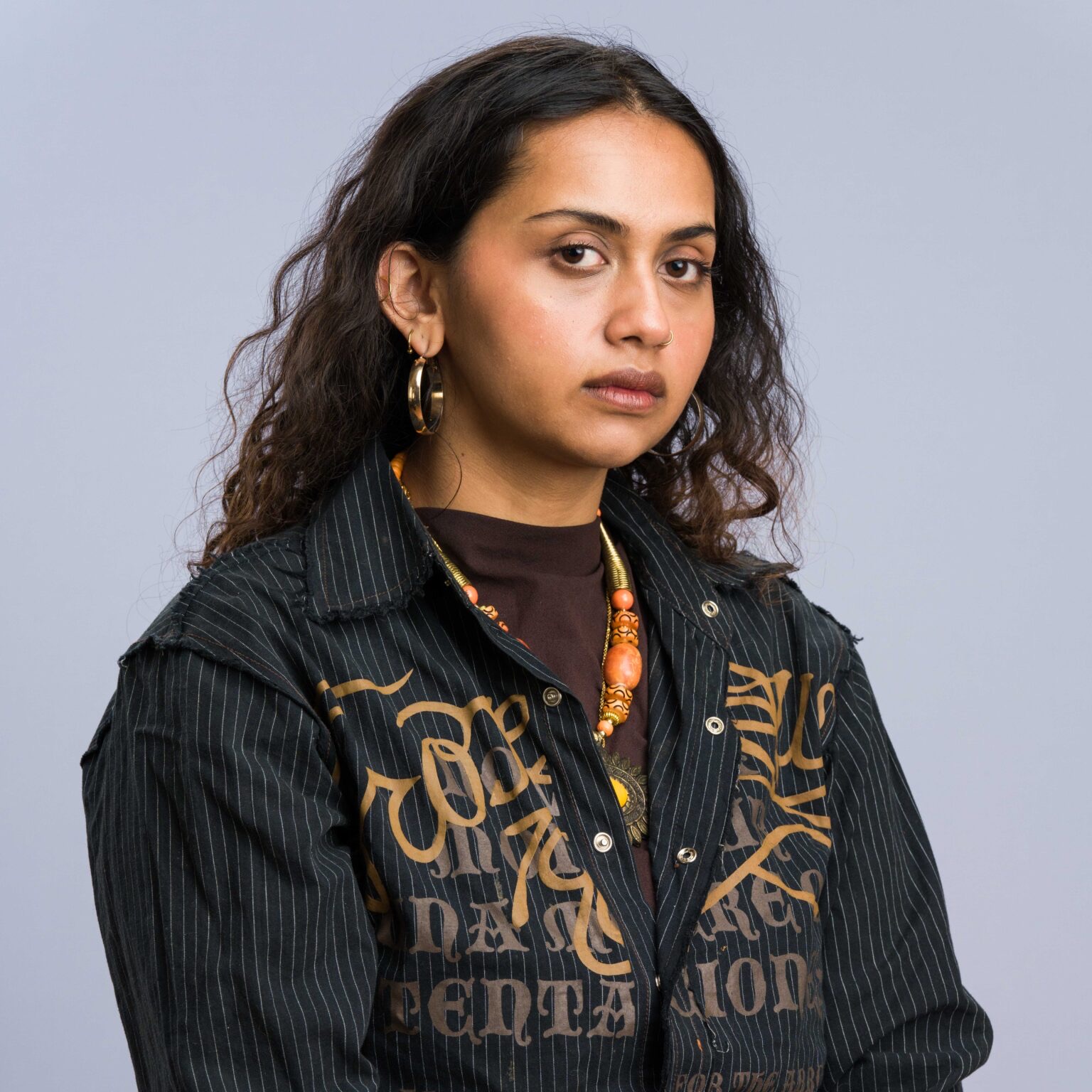
by Mikaela Brewer for The 44 North, Senior Editor

In Virginia Woolf’s To the Lighthouse, there’s a twenty-page chapter where the characters disappear from the stage. Time passes in the 1920s, and we witness their summer home on the Isle of Skye, Scotland, begin its return to the Earth.
That same decade, outside the world of novels but a sure-footed setting for one, a small red brick house was built up the hill from Kempenfelt Bay. A century later, it will be forked from the ground—expropriated for a freeway expansion in a small town.
At the marina in Barrie, Ontario, I rest my elbows on a rock large enough to reach my chest. I look up the hill, now Bayfield Street (Hwy 26); I can see the chimney of that red brick house—my great-grandmother’s, now my grandmother’s.
Before I climb to it, likely for the last time, my eyes glaze over with memory film: The gardens of rhubarb, baby spinach, blackberries, mint, chokecherries, strawberries, and milkweed; the blue rope swing; the heartier, yellow rope swing as my limbs lengthened in youth; the tarp sheds with bicycles of every size; going to school smelling of roasts, homemade fries, and soaking sauce pans when we stayed over on weeknights; my grandpa’s floor-to-ceiling toolshop, converted from an electrician’s testing room; my grandma’s dress design studio, like an autumn forest made of fabric and buttons, where my 8th grade graduation dress was sewn by hand.
In Underland: A Deep Time Journey, Robert Macfarlane writes: “Into the underland we have long placed that which we fear and wish to lose, and that which we love and wish to save.”

His words linger: I recall the caves, tunnels, underground rivers, and mycelial-root networks he writes of over 500 pages of travel in the “underland.” Unlike the home ashore the Isle of Skye, my grandma’s house will be torn from the ground with tongs designed to shred and destroy. No one, even outside of our family, will inherit it. The parts that came from the Earth—which are many, given when it was built—will not return home. And I realize, quite suddenly as I’m writing this in my notebook at the marina, that I can’t be the artist this time. Maybe there are moments in our lives where no human can be…
It’s another who makes us again and again. We seem to remain one of their favourite things to sculpt and paint. They know, though, to flinch from us; monarch butterflies, crows, and red foxes dip back into the woods at the sound of our footfall. They lick their wounds and stitch them with moss, lichen, limestone, and mushrooms. They conceal what’s been taken and gouged from them with water and goldenrod. But they aren’t graceful in their grief or rage—as much as we expect them to be.
I wonder now: Do humans create environmental disasters, or are they in fact the Earth creating—trying to forge art from ever-violent wounds? As we’re responsible for those wounds, our dis-ease with their art—that erupts, explodes, crashes, or drowns—is inevitable.
My family were Scottish settlers on Anishinaabeg land, first among the Ojibwe on Manitoulin Island. What’s happening now to my family’s home has repeated over, and over, and over again—across the Americas, the Congo, Sudan, Palestine, Iran, Lebanon, and beyond. It’s still happening, and no, white families aren’t safe—no matter their ‘allegiances.’

When we ravage a body with the claws of an empire, how can we be surprised that its art is revolutionary, radical, abolitionist? An earthquake, a tsunami, a hurricane blooming inside the rawest flesh.
Like those of us fighting to live in hope’s lane rather than despair’s, Earth processes the only way they know how: Art. And wounds, we know, will wound—especially the most vulnerable.
How can we not spotlight them as the artist—as only defined by the attempts on their life?
I trust them, wholeheartedly, to hold and remember the memories I can’t—in their soil alongside the Anishinaabeg peoples’. I trust them with “that which [I] love and wish to save.” Even paved over, I must believe something remains intact.
And when Earth crafts their art in quakes and floods, the shape of rhubarb gardens and children’s bicycles, to the beat of a rope swing well-broken in, will we see it for what it is? Earth as the only artist to follow into the fray, because if they’re an artist, then so are we.