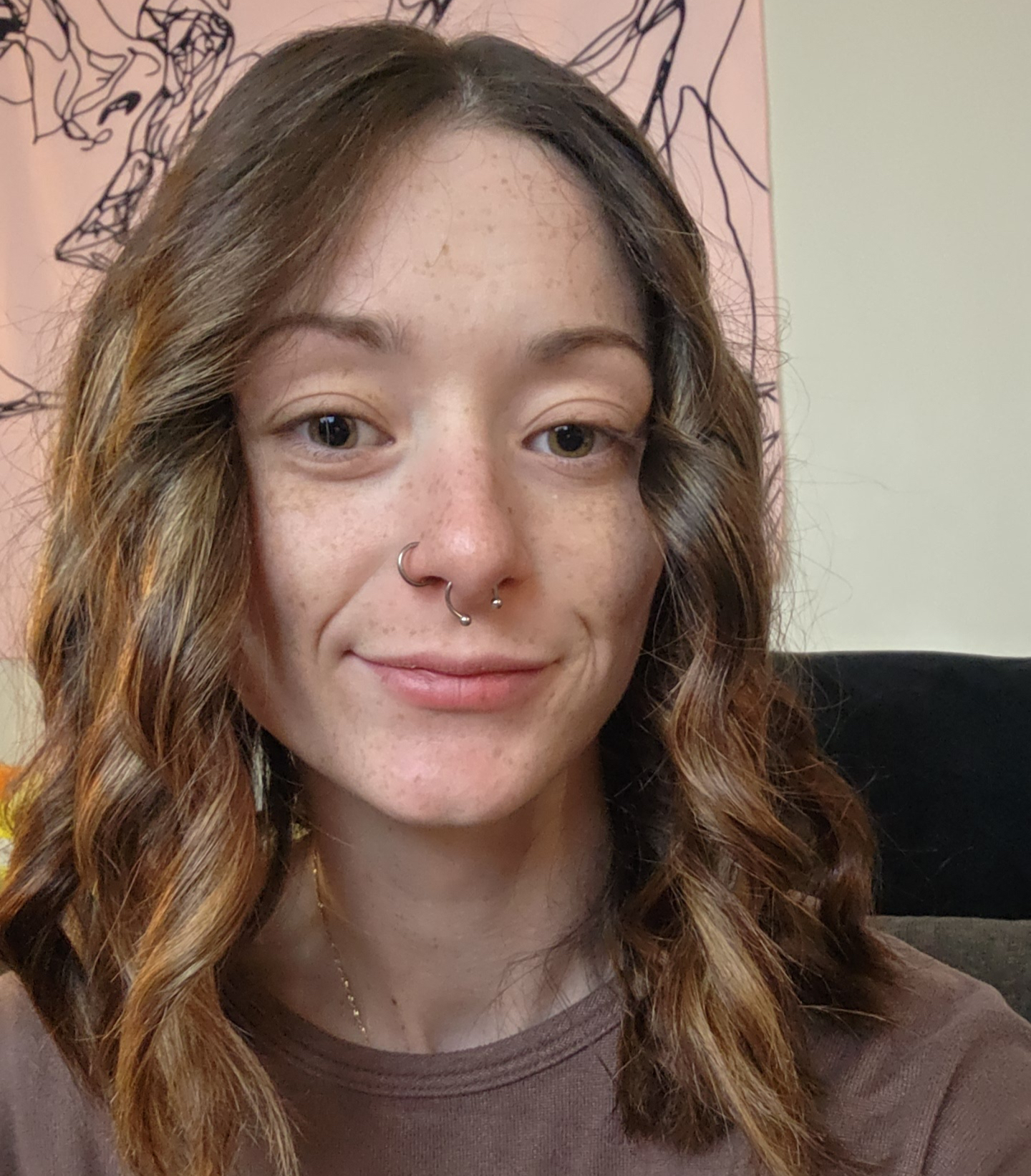
by Fernn Eastman for The 44 North, Guest Writer

To every young person who feels like your body is failing you—no matter how hard your mind fights:
I see you. I was you.
I aged out of foster care with no parents to call, no safety net, and a body that had stopped telling me when I was hungry, thirsty, or even where I was in space. For a decade, I lived with trauma and an eating disorder. I was good at surviving through my intellect. I could think my way through almost any problem—I didn’t realize how steeply my body was failing. Trauma and my eating disorder stripped away basic sensations I didn’t know were missing: Hunger, thirst, the urge to pee, and where my body was.
Soon after, in Vancouver for paramedic training, I failed my CPR exam. Not because I didn’t know the material—I knew it cold—but because my body couldn’t save a mannequin. I was terrified: How could I call myself a paramedic if doing compressions put me at risk of cardiac arrest? I took a medical leave with no one to call. This felt like my last chance.
My doctors hesitated to recommend physical movement, but no other treatment options remained. As a last resort, I turned to exercise. I called gym after gym. Most saw only a liability. No gyms were willing to work with me while I had a feeding tube.
A single yes saved me.

BPM Fitness was the only place willing to work with me while I had an NG feeding tube. Brady Alexov met me where I was, seeing a person, not a liability. Equipped with a degree in kinesiology, he helped me rebuild my body and my trust—one session, one movement, one small victory at a time. He worked with my care team. He taught me that food is fuel, not punishment. He helped me feel my body again. He explained why certain movements target specific muscle groups, how my nervous system responds to different stimuli, and what hunger and fatigue signals actually mean. He taught me to recognize the early warning signs of a neurological episode—the subtle tremors or weakness—and how to breathe through them. I no longer feel like my body is a foreign, hostile place. I am learning to listen to it, trust it, and care for it.
Through that training, my body started waking up. Proprioception returned: I can now feel tightness before pain and know when a movement is safe. Interoception returned: I feel real hunger, thirst, and the need to pee.
For the first time in my adult life, I can say “I’m hungry” and eat with pride, knowing the food builds my muscles for the work I trained to do.
I went from atrophy to muscle, from starvation to pride in my meals, from an NG tube in a hospital bed to standing on my own feet. My ability to focus, regulate emotions, and trust my body all came back through physical movement. That journey cured a part of me I didn’t know was such a root cause of my distress.
Now, I’m a paramedic—pushing the stretcher instead of lying on it, holding patients’ hands the way I once needed mine held.
That’s the part people miss.
Addiction, mental illness, and physical health aren’t separate. They’re often the same wound wearing different masks. Trauma silences the body. It steals interoception—the ability to feel hunger, thirst, safety, exhaustion. It steals proprioception—the sense of where you end and the world begins. When you cannot feel your own signals, you reach for something outside yourself to feel okay. Food. Restriction. Substances. Numbing. Control. Anything to survive feelings too big for words.
That’s not weakness. That’s a nervous system fighting to stay alive.

And you cannot talk your way out of a body that has forgotten how to feel safe. You cannot medicate away a disconnection that lives in the muscles, the breath, the gut. Healing has to include the body. That’s why movement, when it’s safe and trauma-informed, is not just exercise. It’s mental health care. It’s addiction prevention. It’s physical health care. It’s rebuilding the bridge between brain and body.
Research confirms what I lived. Eating disorders have the second-highest mortality rate of all psychiatric illnesses, surpassed only by opioid use disorder. Approximately 50 percent of individuals with eating disorders also struggle with substance abuse, compared to roughly 9 percent of the general population. Both conditions are driven by similar mechanisms: The desperate attempt to regulate overwhelming emotions, to numb unbearable feelings, to exert control when everything else feels lost. Both are, at their core, disorders of coping—and both are fueled by untreated trauma.
This matters because Canada’s drug crisis cannot be solved without also addressing eating disorders. The person restricting food and the person using substances are often the same person, trying different methods to survive the same pain. A system that treats these crises separately will continue to fail people who live at their intersection.
Healing the body through trauma-informed movement addresses both. When I rebuilt my interoception and proprioception at BPM Fitness, I wasn’t just recovering from an eating disorder. I was rebuilding the foundational brain-body signalling that addiction disrupts. The same pathways that had been silenced by trauma began to wake up—for hunger, for thirst, for safety, for self-trust, for life.
The evidence is overwhelming. A 2026 umbrella review of 63 meta-analyses involving 79,551 participants found that exercise significantly reduces depression and anxiety, with the greatest benefits for emerging adults in supervised settings. A 2025 meta-analysis of 26 randomized controlled trials found a large effect on depression and a moderate effect on anxiety. A 2023 grounded theory study of 46 trauma survivors found that weightlifting healed trauma through the felt sense of the mind-body connection, creating a healthier, more empowered survivor. For eating disorders specifically, research confirms that interoceptive disruption is a core feature, and that safe, intentional movement can directly address this in ways talk therapy cannot. Personal training delivered by qualified, trauma-informed professionals is increasingly recognized as a legitimate mental health support. In Germany, physiotherapists have an active working group for psychiatry, trauma, and mental health. In Canada, organizations like the Centre for Trauma Informed Fitness are professionalizing trauma-related competencies for personal trainers.

British Columbia already has precedent for recognizing unconventional services as mental health supports. The Canadian Mental Health Association’s EDGE program in BC explicitly covers personal training for youth with psychosis—not as exercise, but as targeted mental health rehabilitation. The BC Ministry of Mental Health and Addictions also funds mental health continuing education for certified personal trainers. Extending similar recognition to trauma-informed fitness providers is the logical next step—Canada-wide.
I almost didn’t survive to write this. But I did.
So if you’re in care, aging out, or just fighting to stay here—please hear me:
Your body is not your enemy. It’s trying to survive trauma the only way it knows how. Healing doesn’t always come through words. Sometimes it comes through movement. Through a coach who sees your worth. Through one person who says, “Let’s do this.”
You deserve care before you’re dying—not only once you are. You deserve a system that treats the whole you: Mind, body, and spirit. You deserve a resounding ‘yes.’
Don’t give up. Recovery exists in forms you may not have tried yet. Keep reaching out. Keep fighting. Your body can become a home again.
From patient to paramedic—if I can, you can. And you shouldn’t have to walk the ledge of death to get there.
To policymakers across Canada:
Please help make physical movement and personal training available sooner. Here in BC, as a vital example for the country, the Federation of BC Children and Youth have the power to enact this under the MHC benefit. I believe it directly falls under the definition. The MHC benefit currently covers services provided by “unregulated mental health service providers.” The barrier is not regulatory; it’s cultural. BPM Fitness, while not a traditional counselling service, delivered trauma-informed mental health care of a kind that directly addresses the conditions the MHC benefit was designed to treat.
The Substance Abuse and Mental Health Services Administration identifies six key principles of a trauma-informed approach: safety; trustworthiness and transparency; peer support; collaboration and mutuality; empowerment, voice, and choice; and cultural, historical, and gender issues. BPM Fitness embodied every one of these principles when I was most vulnerable. They didn’t hand me a medical intake form only to decline me as soon as I checked a box. They sat down with me for a long, honest consultation—learning about my needs, my goals, my health concerns, and how to build a plan that worked around them. They recognized that behavioural patterns can be symptoms or coping strategies, not compliance issues. They allowed me to move at my own pace, listen to my body, and stop when needed. They asked permission before physical contact. For a trauma survivor who had experienced profound bodily disconnection, this restored a sense of agency that no medication could reach.
BPM Fitness isn’t offering exercise—they’re offering evidence-based, trauma-informed mental health care. Please, from policymakers to loved ones, help make that ‘yes’ available sooner for youth who cannot wait.
—A former youth in care, now a paramedic
References
BC Coroners Service. “Another 150 Lives Lost to Toxic Drugs in B.C. in January 2026.” BC Government News, Jan. 2026.
Canadian Institutes of Health Research. “More than 1.4 Million Canadian Youth Have an Eating Disorder—But Better Data and Early Interventions Are Fighting Back.” CIHR, 2025.
Canadian Mental Health Association, BC Division. “EDGE Program: Early Intervention for Psychosis.” CMHA BC, 2022.
Centre for Trauma Informed Fitness. About CTIF. traumainformedfitness.ca.
Government of British Columbia. “2024/25–2026/27 Service Plan Report.” Province of British Columbia, 2025.
Kenkhuis MF, et al. “Exercise effects on symptoms of depression and anxiety vary by patient, clinical, and intervention characteristics in cancer survivors: Results from pooled analyses of individual participant data of 26 RCTs.” Supportive Care in Cancer, vol. 33, no. 7, 2025, p. 647.
Munro NR, Teague S, Somoray K, Simpson A, Budden T, Jackson B, et al. “Effect of exercise on depression and anxiety symptoms: systematic umbrella review with meta-meta-analysis.” British Journal of Sports Medicine, vol. 60, no. 8, 2026, p. 590.
National Eating Disorder Information Centre. “Eating Disorders and Substance Use.” NEDIC, 2024.
Nowakowski-Sims E, Rooney M, Vigue D, Woods S. “A grounded theory of weight lifting as a healing strategy for trauma.” Mental Health and Physical Activity, vol. 24, 2023, p. 100521.
Physio Deutschland. Arbeitsgemeinschaft Physiotherapie in Mental Health (AG PTMH).
Substance Abuse and Mental Health Services Administration. SAMHSA’s Concept of Trauma and Guidance for a Trauma-Informed Approach. HHS Publication No. (SMA) 14-4884, 2014.
Wood L, Stanton R. “Weight Lifting as a Trauma-Informed Intervention: A Grounded Theory Study of 46 Survivors.” Journal of Trauma & Dissociation, vol. 24, no. 3, 2023, pp. 312–29.
Zucker N, et al. “Interoception and Eating Disorders: A Systematic Review.” Neuroscience & Biobehavioral Reviews, vol. 125, 2021, pp. 501–15.
About Fernn Eastman

At 27 years old, I am a proud survivor and a dedicated paramedic. My journey has been anything but conventional. Entering the foster care system at age seven and moving out on my own at sixteen, I learned early on that survival requires grit, adaptability, and a fierce determination to write my own story.
While navigating the world as a young person was far from easy, I refused to let my circumstances define my future. I focused on my education, graduated, and found my calling in emergency medicine. Today, I am proud to serve my community as a paramedic—a role that allows me to turn my hardship into healing for others.
When I am not on shift, I reconnect with the world that keeps me grounded. I am an avid hiker and a lover of nature, music, and animals. I also have a passion for the unique and the intricate; I breed dart frogs and specialize in creating bioactive terrariums, building tiny, thriving ecosystems that mirror the resilience I see in the natural world.
Above all, I am an advocate. My passion lies in fighting for justice and speaking up for those who feel voiceless. I can proudly say that I am not just surviving—I am thriving, and I am incredibly proud to be alive.