top of page

by Mikaela Brewer for The 44 North, Senior Editor


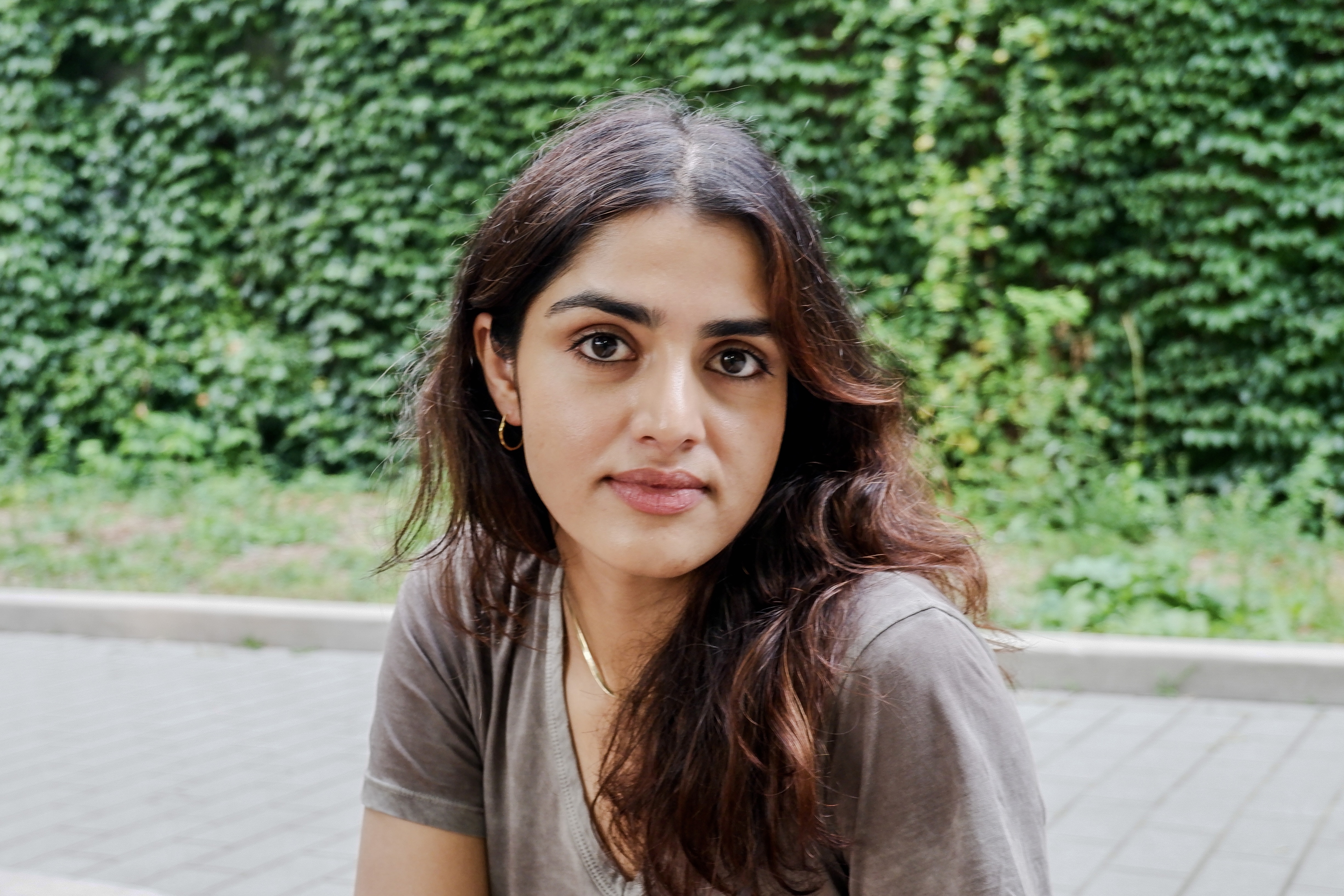
The Winner of MHAW’s Philanthropy Challenge, in partnership with Mental Health America, Wabash Valley Region, via Apuroopa Kavikondala

"Now the president of MHAW 2027, I’m incredibly excited to continue fostering this mission and environment on Purdue’s campus with our Boilermakers, because the impact won’t stay in West Lafayette; it’ll grow everywhere.

Editor’s Note:


Mental Health Action Week (MHAW) is a student-led organization at Purdue University that brings a dedicated week of mental health programming to campus each spring (March 2-6th, 2026, this year). For the past seven years, they’ve fostered a campus culture rooted in support, understanding, and resilience around mental health. 


The MHAW team believes this initiative not only strengthens their campus but also advances the broader effort to destigmatize mental health. I spoke with MHAW 2027’s president, Apuroopa Kavikondala, about the impact of this work. 


Mikaela Brewer (MB): I’m inspired by how hard you worked to reflect and build in all parts of student life/experience throughout the week: Conversation, academics, community/culture, movement/nourishment, and creativity. What offerings seemed to resonate most with students? With you? Did anything pleasantly surprise you about this year’s lineup, in particular?


Apuroopa Kavikondala (AK): We were so excited to involve all parts of student life during this week! From clubs and student organizations to athletics, the various colleges (such as Engineering and the Business School), and even our very own Recreational Sports Center, which hosted various events in honour of MHAW, to collaboration in our mission, our commitment made MHAW 2026 a success. Some examples of student organizations contributing to our cause include: 

  • Our kickoff celebration in partnership with Purdue Student Government and various other mental health organizations, such as the American Foundation for Suicide Prevention

  • The run club hosting a run in honour of MHAW and mental health

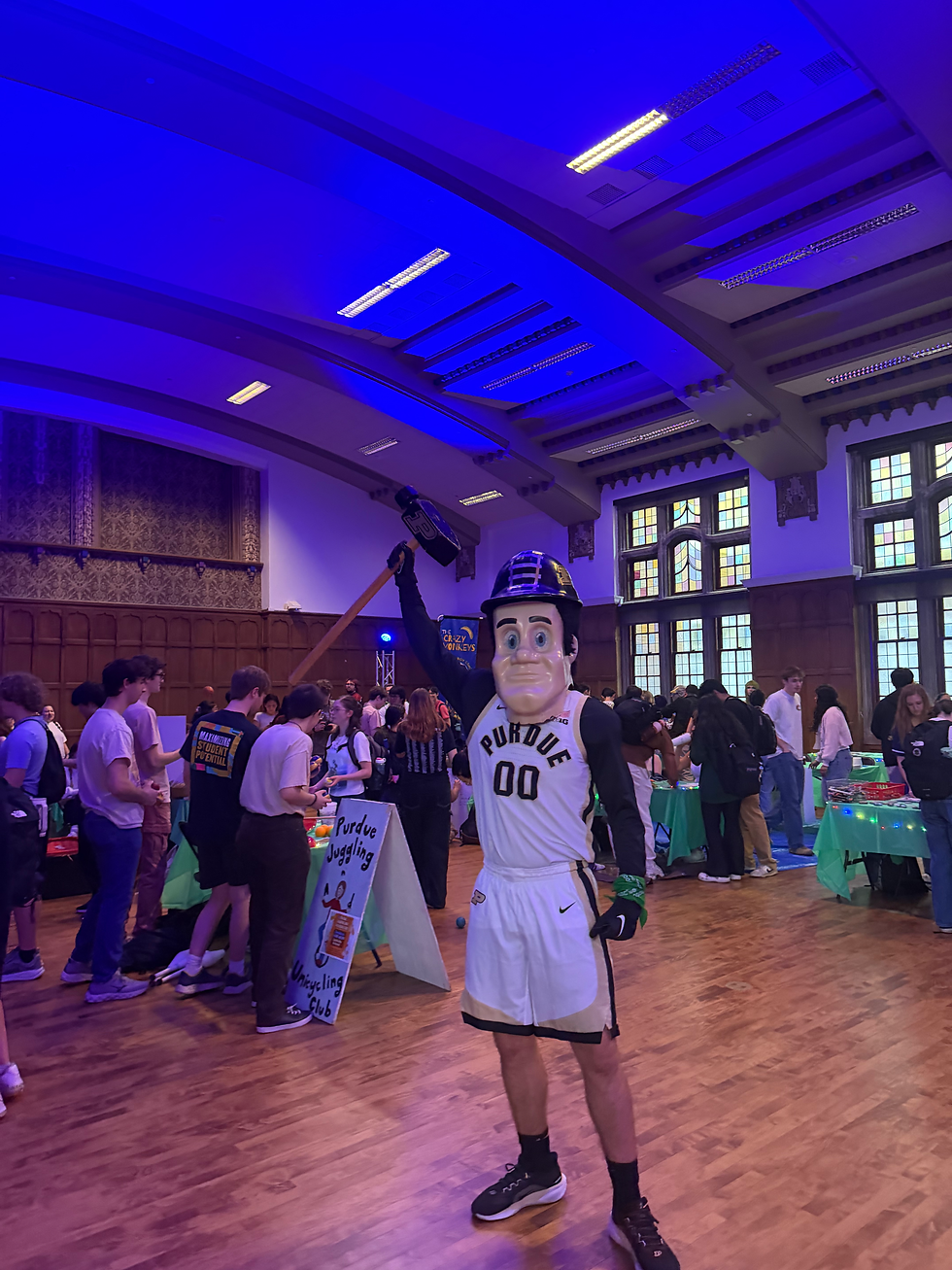
  • Our Unity Day celebration to honour what our well-being thrives on—community and connection. The celebration included food, performances, a creativity fair, our special guest, Purdue Pete (our mascot), and so much more!

  • A stress-board-breaking event by the Taekwondo club, where you’d write your stressors on a board and then break it!

  • A weeklong fundraiser challenge with fraternities, sororities, and cooperative life (FSCL), where half of the donations were directed to philanthropy and half to our partnership with Mental Health America (Wabash Valley Region)
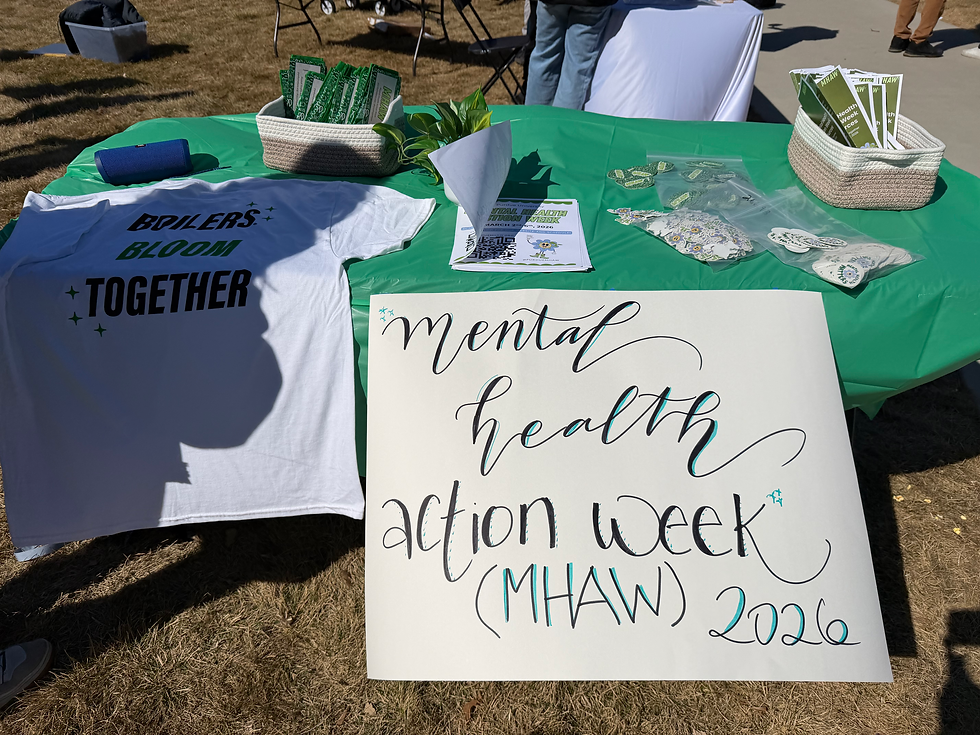

A hand-drawn MHAW 2026 poster, stickers, and t-shirts at an outdoor booth, via Apuroopa Kavikondala

Overall, students loved the variety of events we hosted because no matter what they were interested in, they were able to participate. It made students feel like they belonged and were heard, even in the busyness of our lives.


MB: I love the imagery, story, and metaphor you wove into MHAW. Could you share more about why growth and blooming are so central to what you (and former students!) have built and offered over the past 7 years? 


AK: MHAW used to be a part of the Purdue Student Government (fully hosted by them), so this was our first year as our own organization! The reason we wanted to make growth/plants our theme was that it’s so central to how life works and moves. Everything blooms, and then it falls/decays like leaves in Autumn. In due time, it’ll bloom again, and that’s what mental health and well-being are about. We go through phases, and that’s human! It’s very important to rely on one another and seek support, especially in those times of regrowth. 


MB: You’ve done excellent, empowering work connecting people, staff, resources, spaces, etc., to bring MHAW to life. From the outside, peeking in, it feels real: I see an authentic, full-community, hands-on gathering where everyone both gives and receives care. What did it feel like to nurture these relationships and bring so many people together in support of a shared goal? How might your work be a model for other university students hoping to do something similar? And beyond, across workplaces, politics, etc.?

MHAW logo, via Apuroopa Kavikondala

AK: Purdue has such a great community around well-being and mental health, the MH one being Purdue CAPS (Counselling and Psychological Services), so it was beautiful to see the collaborations come to life during the week. Mental health is universal; we all have it, we all struggle, and we all must learn how to navigate those situations—not alone, but with the help of others. Any other university that wants to implement their own Mental Health Action Week should first recognize other parts of student life that can support it, whether it’s their mental health resources on campus, other mental health/wellbeing-related organizations, or even—especially!—collaborations that aren’t necessarily directly correlated. Mental health is connected to every part of campus life; we can take action from many angles. Ultimately, the reason we wanted to call the ‘A’ in MHAW “action” instead of “awareness” is that it’s time we started creating a more welcoming space for people to use the resources at hand and feel less alone. It’s one thing to talk; it’s another to do


Purdue Pete, via Apuroopa Kavikondala

MB: I’m curious if you, Sunishka (MHAW President, 2026), and your team learned anything about yourselves and your own mental health during MHAW? Designing, creating, and giving something so expansive can be nourishing, of course. But it can also be a lot! In this type of role—which many will relate to across education and mental health care systems—how did you care for yourselves? 


AK: MHAW was definitely a time commitment, but the reason we were so willing to put the time needed into it is that it’s such a great cause—one that’s dear to all our hearts. Even though we organized MHAW, we definitely still felt its impact and resonance in our own lives. During organizing, outreach, and implementation, we made sure to divide tasks among ourselves, ask for help when there was a lot on our plates (because we are, of course, people and students first!), and just tried to do our best wherever possible. MHAW 2026 was possible, honestly, because of a dream team, and I truly am grateful for the reliability and hard work that everyone offered. 


Now the president of MHAW 2027, I’m incredibly excited to continue fostering this mission and environment on Purdue’s campus with our Boilermakers, because the impact won’t stay in West Lafayette; it’ll grow everywhere. 

by Hanna Grover ​for The 44 North, Guest Writer


Hanna at a speaking engagement, wearing a black striped blazer. Via Hanna Grover.

“In these conditions, poetry becomes more than a form of art. A poem can hold grief without trying to solve it. It can preserve joy in fleeting moments. It can transform isolation into resonance, allowing someone to read a line written by a stranger and think, Someone else has felt this too.

Poetry is one of humanity’s oldest forms of storytelling, and today, it feels more necessary than ever. In a world saturated with headlines, algorithms, and rapid consumption, humans barely have enough moments long enough to feel. 


For many young people, poetry has become a language for emotions that are otherwise difficult to articulate. We’re growing up in an era shaped by uncertainty alongside rising rates of anxiety and burnout, increasing loneliness despite digital connection, and a globe where many youth feel pressured to mask themselves. In these conditions, poetry becomes more than a form of art. A poem can hold grief without trying to solve it. It can preserve joy in fleeting moments. It can transform isolation into resonance, allowing someone to read a line written by a stranger and think, Someone else has felt this too. That moment of resonance is powerful because it reminds us we are not alone. Youth are craving spaces where they can be authentic together as a collective without fear of judgment. And while social media evidently encourages curated identities and constant comparison, poetry invites people to speak honestly. 


Hanna receiving a regional health & wellbeing award for Poet2Poet from Ingenious+. Via Hanna Grover.

I’ve witnessed this firsthand through my work founding and spearheading Poet2Poet, a youth organization focused on enacting poetry to battle the youth mental health crisis and create connection. Through workshops, open submissions, and community initiatives, Poet2Poet was built around a belief that creative expression can foster emotional connection and empower youth voices. What began as a platform for young poets gradually became an international global community where youth across the world could share their stories and engage in health and wellbeing programming through poetry. Poet2Poet has published over three hundred poems from young writers around the world, each carrying a different perspective but united by the same desire to be heard. Moreover, Poet2Poet focuses on delivering opportunities to promote youth health and wellbeing through poetry by running free in-person and virtual writing workshops for youth. Our most recent workshop for National Poetry Month, Waves and Words, was a collaboration with Unsinkable, one of Canada’s largest storytelling-focused youth mental health charities, designed for youth aged 16-25 in Canada, in person and virtually. After weeks of planning with the amazing Unsinkable team, Waves and Words was created to intentionally provide a space where youth used writing and poetry to explore emotional wellbeing, identity, and healing. The entire event felt surreal, but what struck me most was how people who entered the room as strangers left feeling connected through shared vulnerability. At that moment, it was clear that the beauty of poetry is how it transcends barriers. No one needs formal training, expensive resources, or a perfect understanding of literary devices to write a meaningful poem. Poetry is accessible because it begins with honesty and an inherent creative freedom to experiment with language on the page, and that’s exactly what was seen during the workshop. 


The banner for Hanna’s "Waves & Words" workshop

Hanna at a workshop, connecting with writers using paper & markers. Via Hanna Grover.

My journey in building Poet2Poet has always demonstrated how poetry can function as a form of care. Unlike many conversations around mental health that often focus only on diagnosis or intervention, poetry allows people to process emotions and deal with challenges in accessible human ways. It’s vital to have a daily outlet for your well-being, and in the case of Poet2Poet, a community that can support you. National Poetry Month further amplifies this idea by transforming poetry from an individual act in isolation into a collective, community movement. During National Poetry Month, poetry becomes visible in schools, libraries, communities, and online spaces. It encourages people who may never normally engage with poetry to pause and encounter it, regardless of whether they see themselves as a “writer”. It reminds us that everyone has a story worth telling. Every person carries experiences, memories, fears, and hopes that can resonate with others. 


At the end of the day, poetry matters now because humanity matters now. In a fast-moving world that can sometimes feel emotionally numbing, it’s clear that poetry helps people reconnect—with themselves and with one another—one line at a time.


Hanna Grover is a youth advocate, researcher, and public speaker driven by a commitment to health and wellbeing equity, children’s rights, and youth empowerment. Her journey began with a simple belief: that young people deserve a seat at every table where decisions about their wellbeing are made. Today, that belief shapes everything she does, from founding Poet2Poet, a youth-focused organization that merges poetry with mental health, to working with national health organizations to create more equitable healthcare systems. Through Poet2Poet, Hanna has helped thousands of youth across 70+ countries use writing as a tool for healing, connection, and advocacy. Alongside her many personal initiatives, she serves and collaborates with a range of organizations, advisory councils, academic teams, and advocacy platforms on projects that center youth voices for systems-level change. She has had the privilege of speaking at national conferences and panels, often serving as the youngest voice in rooms filled with fellow policymakers, researchers, and professionals with a hope to empower others like her. Her advocacy has been recognized through awards like Canada’s Top 10 Under 18 Changemakers, British Columbia's Medal of Good Citizenship, and Surrey’s Top 25 Under 25.


by Wardah Malik for The 44 North, Contributing Writer - Politics


Police officers at the Union Station PATH entrance

"While the feeling of safety is difficult to pinpoint, what is known is that many transit riders do not associate police with safety.

Half of Toronto Transit Commission (TTC) riders don’t feel safe using the system. At least, that’s the impression you might get scrolling through Councillor Brad Bradford’s (Beaches—East York) social media. He has made transit safety a major pillar of his mayoral campaign, arguing for increased regulation. His latest motion to place police officers at every station was approved in March. Despite overall crime rates declining, Councillor Bradford maintains that “safety isn’t defined by statistics in a spreadsheet. It’s about how people feel.” If that’s the case, how do we know whether increased police presence actually leads to greater safety? In other words, can the feeling of safety truly be measured?


On July 7, 2023, a graphic video of a man being stabbed inside a Toronto subway car circulated widely on social media. In the shaky footage, a passenger can be heard yelling, "Help him. He’s stabbing him up. He’s killing him.” The fear in the speaker's voice resonated with viewers, many of whom cite the incident, along with other viral videos depicting violent episodes on the TTC, as evidence in favour of increased security measures on the transit system. These videos and images, while useful for holding individuals accountable, also have the effect of creating an environment of heightened unease and judgment. Online forums, in particular, have contributed to this dynamic. “Oh, another one?” one user writes in response to a March stabbing. “More poverty, more problems,” says another. Although reductive, these comments reflect and reinforce broader conversations taking place beyond digital spaces. Incidents of violent crime are being treated as a marker of the TTC and are increasingly being used to advocate for stricter policing of public spaces. In an article for the National Post, Councillor Bradford writes, “It’s the indiscriminate nature of these incidents that stays with you, the fact that in a crowded vehicle or on a narrow platform, there is nowhere to go when trouble begins.” 


Toronto police presence on the TTC subway system, January 2023. Via CITYNEWS/Sean Toussaint

For Councillor Bradford, the high-profile incidents of recent years are not isolated events. Instead, they reveal a trend and serve as a warning for TTC riders: On your next commute, you could be the victim of an attack. While the TTC insists that this isn’t the case and hundreds of millions of trips go on every year “without incident,” its own data complicates that narrative. In a 2024 annual report, the TTC noted that Special Constables made 215 apprehensions under the Mental Health Act, an increase of 9% from the previous year. The report described these apprehensions as responses to “calls received for persons who were in distress or posed a threat to themselves or others.” A 2025 investigation by CBC and the Investigative Journalism Foundation adds to this, finding that the number of reported assaults on Toronto-area transit increased by 160 percent between 2016 and 2024. 


The rise of violence on the TTC is difficult to attribute to a single cause. However, many experts argue that these incidents signal an urgent need for better support services for people struggling with homelessness, mental illness, and addiction. Often described as a microcosm of Toronto, the TTC reflects broader dynamics across the city and reproduces the tensions that exist beyond the platform. This means that high rental costs, overcrowded shelters and warming centers, and a growing housing affordability crisis will inevitably translate to more people using subways and streetcars as “makeshift bedrooms.” At the same time, the closure of supervised consumption sites has contributed to more visible drug use and discarded equipment across the TTC system. 

And although the TTC and the City of Toronto have taken action to minimize these impacts through the introduction of several programs (including community safety ambassadors and security officers), many argue that it’s simply not enough support. Frontline transit workers, specifically, have called for more overdose response teams, outreach and crisis workers, and mental health professionals to ease their burden and reduce the expectation that they act as social workers to counsel vulnerable riders and de-escalate emergencies. However, rather than responding more robustly to this call, Councillor Bradford and others who view policing as a means of creating a safer Toronto have opted to increase police presence. 


“We agree that the burden of responding to emergencies shouldn’t be placed on transit workers alone. However, we also know that police often escalate tensions on transit by, for example, harassing riders and using unnecessary force. Expanding police presence on the TTC contributes to a culture of fear within communities that are already overpoliced, such as racialized riders, Indigenous riders, immigrants, unhoused people, and people experiencing mental health crises,” Nico Nothwehr from the transit advocacy organization TTCRiders tells The 44 North. 


A case study by the Ontario Human Rights Commission reaffirmed these concerns, showing that Black people in Toronto were 3.25 times more likely to experience a Toronto Police Service check than White people. The study’s community consultations also called for greater investment in social programs rather than policing, arguing that reallocating funding toward community supports would create safer, healthier, and more equitable communities that are less reliant on police services. On the TTC, this could mean expanding community-based, health-focused responses that de-escalate emergencies and strengthen non-police mental health crisis services.


Past initiatives have already demonstrated the effectiveness of these approaches. For example, the Toronto Community Crisis Service (TCCS), a free, confidential, 24/7 mobile mental health crisis response service that is available citywide to people 16 years of age and older, received more than 29,000 calls for service in 2024 and dispatched mobile crisis teams over 23,000 times across the city. Notably, 78 percent of calls transferred to TCCS by 911 were successfully resolved without any police involvement, demonstrating that non-police crisis response models can effectively support public safety while reducing unnecessary police interactions. 


Still, even as advocates and community organizations continue to call for expanded, permanent support services and raise concerns about overpolicing, the TTC has steadily increased police presence across its properties and vehicles since 2021, arguably in an effort to restore pre-pandemic ridership levels. However, this strategy hasn't necessarily made riders safer. That reality makes it difficult to believe that Councillor Bradford’s latest policy will do anything other than target the city’s most vulnerable residents to create an immeasurable feeling of safety for a select few. In fact, over time, this policy will likely do more harm than good. It risks normalizing an expanded police presence in public spaces and making people increasingly dependent on policing as the primary model of safety. 


While the feeling of safety is difficult to pinpoint, what is known is that many transit riders do not associate police with safety. Policy-makers mustn’t ignore this and, instead, use it to guide consultations and engagement with riders on what truly brings about community well-being. And although a new TTC safety plan to implement a crisis worker program is a step in the right direction, issues beyond the platform need to be addressed as well. For Nothwehr, “[T]he most effective solutions will be upstream—like increasing the number of dignified and accessible shelter spaces, building more supportive housing units that use a housing first approach, reopening supervised consumption sites, and increasing funding for mental health and addiction supports.”

Wardah Malik is a Toronto-based researcher, editor, and historian. She is the founder of Historyless Magazine, an independent publication covering global affairs and underreported political narratives. Her work spans media, human rights, and community-based research, including projects on press freedom, public health, and gender-based violence. Her research interests include governance, decolonizing language, and the preservation of underrepresented histories. Wardah holds an MPhil in World History from the University of Cambridge.


bottom of page