top of page

by Alaina Zhang ​for The 44 North, Newsletter & Reviews Editor


Via Sixth Tone
Via Sixth Tone
“One must have integrity—those without it are not worth knowing.” —Ye ShuRou, From Dear You (2026)

Growing up, I often wondered about my family’s history. The tales of lost generations and ancestors seemed to reside behind a screen of mist. I liked to ask my parents about their youth, what my hometown was like back then, and compare it with the history I’d learned myself. Sometimes the two accounts stand in stark contrast. Other times, they’re a mirror. Either way, these tales always had a mythical quality, as if they belonged in an otherworldly space and time. 


Watching the 2026 Chinese film Dear You with my family made me feel similarly. Dear You follows the journey of a grandson from Chao Shan, China, who ventures to Thailand in search of a grandpa he’s never met. What this journey unveils is a series of buried history between three characters—his grandmother Ye ShuRou, his grandfather Zheng MuSheng, and a mysterious woman named Xie NanZhi.


When the film begins, it has been forty years since Zheng MuSheng’s last letter to Ye ShuRou, in which a single photo of an unfamiliar woman and a group of kids is enclosed. Therefore, throughout the past forty years, Ye ShuRou has held onto the belief that Xie NanZhi, the woman in the photo, is Zheng MuSheng’s second wife in Thailand. From then on, all correspondence has halted between the family in China and Thailand. 


Instead, the truth is that Zheng MuSheng died a few years after arriving in Thailand, and Ye ShuRou had been a great friend of his there, helping him draft letters back home. The film depicted a history I had never known. Due to the Chinese Civil War, many ‘peasants’ decided to cross the ocean to Southeast Asia in search of better opportunities, and Zheng MuSheng, although a fictional character in the film, embodied that experience. 


Having grown up watching many Chinese films, I’ve realized just how entangled the history of a nation is with the personal fates of individuals. The era in which characters reside often determines the trajectory of their lives. Hence, lost relatives, untold family narratives, and misunderstandings are not rare occurrences. Each family has its own secrets and regrets—as China lurches forward, the ghosts of its past don’t simply disappear. 


At the same time, I was drawn to the film’s portrayal of literacy and education in tandem with immigration and family. Because many Chinese immigrants were illiterate, those who could read and write took up the responsibility to not only teach those who couldn’t, but help them draft letters back home. While Zheng MuSheng doesn’t know how to read, he’s the one who encourages Xie NanZhi, someone with Chao Shan heritage who grew up in Thailand, to learn the language and eventually become a teacher. Xie NanXhi then goes on to draft many letters for him to send back home to Ye Shurou. These literate individuals were crucial in leaving a written documentation and archive of just how much loved ones missed each other across the wide ocean that divided them. 


Dear You is a film about family, history, and education. But it’s also a film about two women and a man. What I loved most about it was the director’s intentional decision to steer clear of the idea that Xie NanZhi and Zheng MuSheng harboured romantic feelings for each other, making that Xie NanZhi’s motive for helping Zheng MuSheng write letters home. Instead, I appreciated the fact that while Zheng MuSheng was the thread that tied the characters together, all three protagonists are central to the story. Even after Zheng MuSheng dies, the string remains intact, and the two women meet each other in Thailand in their old age at the end of the film.


This simple narrative depicts an unconventional love story that’s so prevalent yet rarely portrayed in popular media. “Love stories” aren’t always about a couple—they can be about two friends, two families, people of the same origin in a foreign place, or even strangers who have never met. By defying gender norms, this story helped me see through the mysticism of stories from the past and how relationships between strong men and women were not always soap opera romances, but rather examples of incredible strength, mutual aid, and collective care that we can all learn from and lean on today. And even though times have changed, the medium of letter writing throughout Dear You shows how writing and language continue to be a beautiful way for people to connect and to express their love for each other. Sitting next to candlelight and reading the handwritten words from a loved one helps bridge the vast distance and time that stands in between. 


Sometimes, there’s no real villain in our past—only a series of unfortunate circumstances, misunderstandings, and lost voices amongst the rushing tide of history.
 

by Alaina Zhang ​for The 44 North, Newsletter & Reviews Editor


“Please let me keep this memory, just this one.” —Joel Barish, Eternal Sunshine of the Spotless Mind 

Last quarter, I was lucky enough to take a class called Medieval Dreams and Visions. After reading works by Chaucer, Dante, and other authors who lived centuries ago, we ended the quarter by watching Eternal Sunshine of the Spotless Mind. 


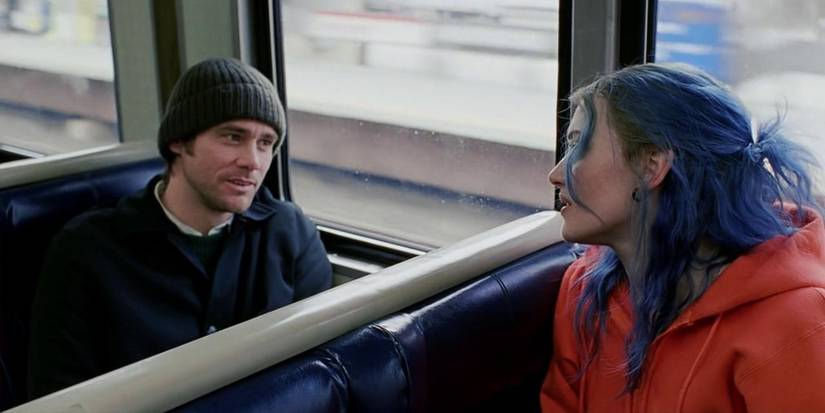
The 2004 film follows a young man, Joel, as he revisits his diary after several years. Sitting next to the beach, the cold wind slashing against his face, he finds it difficult to recall why there are missing pages in his diary, remembered only by where they were torn away. The hollowness is all-consuming. Soon after, on a train, he meets a young woman named Clementine whom he quickly falls in love with. Later, it’s revealed that the two had previously been in a relationship, which ended poorly: Clementine had undergone a surgery to erase all memories of Joel. The disjointedness Joel feels at the beginning of the film was, in fact, the result of his own surgery to, in turn, forget Clementine.


The dream-like setting of the film lends masterfully to the theme of vulnerability it aims to portray. Not just a romance or sci-fi movie, the story is really about self-confrontation and reconciliation. Joel, upon realizing that he does not in fact want to forget Clementine, is forced to navigate his own brain and walk the memory lane of his mind. One of the most poignant moments in the film is when Joel enters the memory of being bullied by other kids and Clementine—a version of her inside his head—is watching. Childhood trauma is private and often so shameful that adults bury it deep inside themselves. Joel, however, is forced to confront those memories, which shaped who he is now. In a film, it’s healing for us to see Clementine bearing witness, whether real or imagined by Joel; Childhood trauma isn’t observable by our adult friends or partners, even if we verbally share memories with them. The scene ends with Clementine dragging Joel away, and although all of this takes place inside Joel’s mind, it’s real enough to make him—and us—feel seen in a vulnerable moment. 


My perception of the film also shifted because of my class. One of the surrounding questions we were interested in throughout the quarter was why authors across the ages are so drawn to the experience of dreaming and continue to weave it into their works. In the movie, the dream world is less a dream and more a disorganized catalogue of memories, which invite us, alongside the characters, to navigate the reflection, trauma, and life that make up who one is in relationship with others. 


For me, dreams have always been a special source of inspiration—a place where I can witness my deepest desires and hopes materialize in strange ways. My dream world is also a space where I truly feel safe and free, a space available only to myself. Admittedly, I don’t think I’ll ever be able to decipher the meaning of my dreams or know whether they have meaning at all, but what I do believe is that dreams can confirm my insecurities, trauma, restrained feelings, and thoughts. What surfaces in my dreams is a combination of magic and reality in its rawest form, and the act of dreaming alone can be reassurance that my life can take on alternative endings, parallel worlds, and unimaginable possibilities. 


The idea of “making sense” of a dream is, in fact, similar to the art of interpretation itself. In our class, this was one of the reasons we attributed to the prevalence of using dreaming as a storytelling framework. When we read about dreams, there are often at least two, if not more, layers of interpretation at play: We’re simultaneously making sense of a bewildering experience and attempting to decipher why a work was presented through the lens of dreams in the first place. When creatives build dream worlds for us that don’t exist, or exist in a multiverse, the seeds are often personal or collective memory re-imagined. This unique meaning-making opportunity, via dreams, expands how we think and remember. In other words, we can see that more is possible beyond our waking, conscious hours. 


That’s exactly what I felt Eternal Sunshine of the Spotless Mind expressed. After Clementine and Joel realize what they’ve gone through, after they hear the ugly things they said about each other before the surgery, they still decide to give each other another chance—at least in being remembered if not in a relationship. They’re also choosing to give a chance to the idea of a possibility, even if it might not end in the best way. 


Relationships can be terrifying. We can never know what someone else thinks, nor what their words and actions mean. Though the procedure of memory probing and removal in the film seems cinematic and unbelievable,  we, too, probe through our own minds, equipped with nothing but fear, to dig up memories—ones we never wished to revisit—in search of some truth about ourselves. The difference between the film and reality is what makes it most powerful; the story asks: What if we were to show all of this to someone else, who we love, with an equally complex past? Would it really be incriminating? Or would it heal the ways we think we’re alone? Eternal Sunshine of the Spotless Mind provided me with a newfound perspective on what it means to be in a relationship with others, and to be in a relationship with oneself. 


We spend almost a third of our lives in deep sleep, dreaming. Perhaps, like Joel and Clementine, we’re sorting through the entangled web of our dreams, trying to find the confirmation, confidence, and reassurance we all need to move forward when our eyes open again and a new, terrifying, inevitable day awaits us. But the landscape of memory is worth walking, because as Joel and Clementine show us, we’re never the only ones there when we think we’re better off alone.


bottom of page