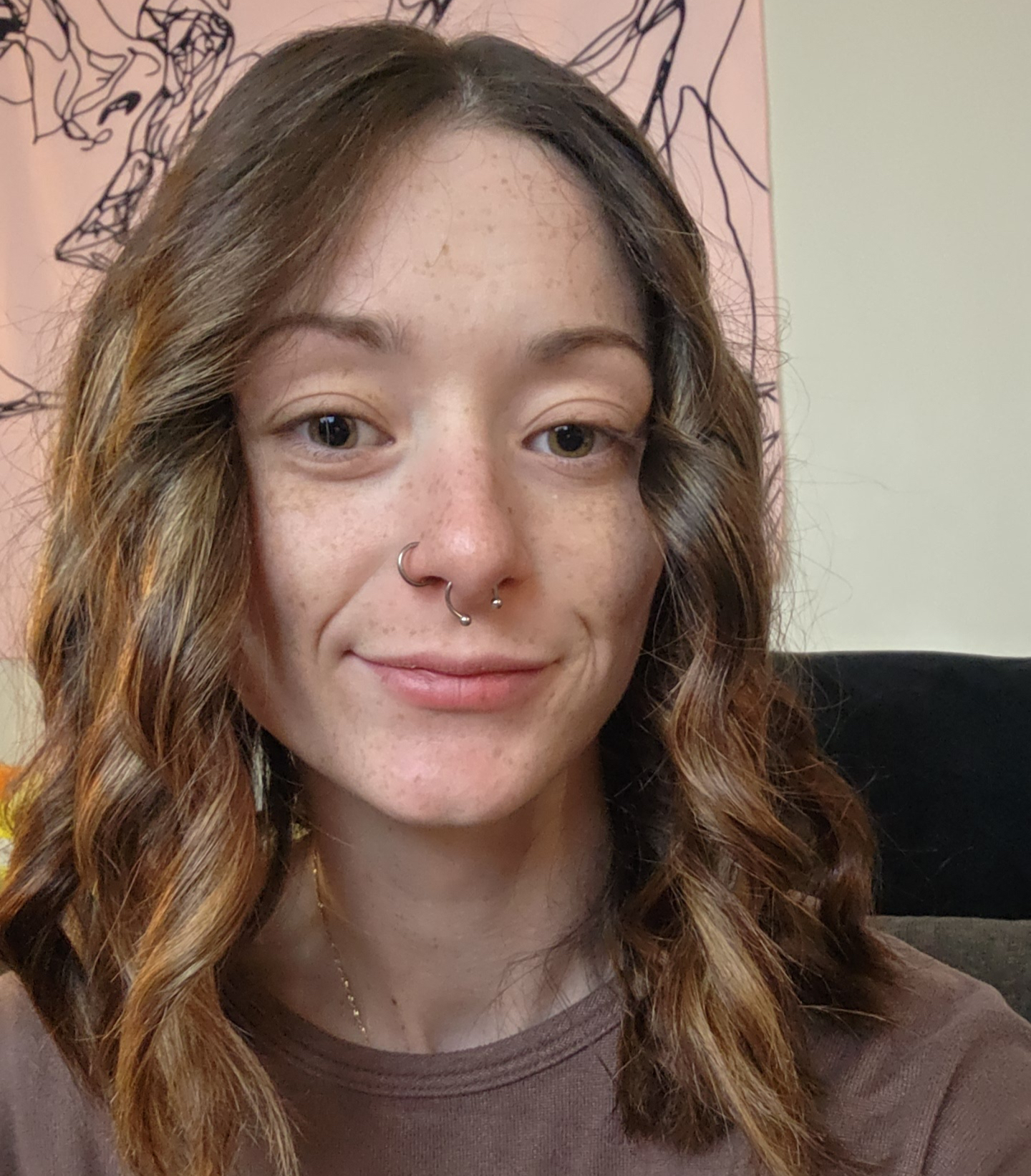
by Gillian Smith-Clark, for The 44 North, Editor-in-Chief

As I ran alongside the riverbank on a clear, crisp fall afternoon in my new city, following a dirt path through a canopy of trees just beginning to turn colour, I should have felt relaxed. Instead, the moment when I normally let go, letting the music from my headphones seep into my consciousness and my mind drift and clear, didn’t come.
My thoughts were jumbled and scattered—moving between the beauty of my surroundings, whether I was alone on the trail, the warmth of the sun, and: How safe is it to run alone here?
That particular section of the trail was a paradox. Covered in foliage and sheltered from view of the nearby road, what made it so lovely was also what made it potentially dangerous. An acquaintance had recently reminded me of a murder that occurred decades ago, somewhere along this riverbank. How safe is it now? Should I have an alarm or pepper spray? Should I not be wearing a ponytail, because someone could jump out of the bushes and grab it? How long would it take for someone to get to me if I were attacked and screamed?
Am I overreacting, overthinking? Maybe.
Images of the men in my life, past and present, filled my head. Some were rolling their eyes. I wanted to let my mind drift. I wanted to turn up the volume on my music and daydream, but I couldn’t.
The memory of Alyssa Lokits surfaces—a horrific story that happened on a trail not unlike this one. With a shiver, I wonder how far I am from the paved trail and more people.
What lingered after that run was not whether I was overthinking the situation, but the fact that the calculations had to happen at all. Alongside that was another uncomfortable realization: How many years of my life have contained a similar mental calculus—the times when I got it right, and the moments when I realized I’d made a costly error.
Some of us move through the world carrying questions daily that others rarely have to ask; still others inherit forms of watchfulness so embedded in our psyches that we barely notice the effort they require.
That idea—of attention, and of who is required to pay it—runs quietly through many of the pieces in this issue. What do we learn to notice? What are we afforded the freedom not to think about? And once something enters our awareness, what responsibility follows?

“Braiding a Ladder” is a pivotal piece, bringing together three different but equally powerful perspectives on modern-day misogyny. At its heart is a question about what happens when the burden of noticing misogyny is disproportionately carried by the people most likely to experience its consequences. Women are often asked to remain alert to risk, to recognize warning signs, to modify our behaviour, to protect ourselves, to explain what happened afterward. But what changes when the work of paying attention is more widely shared? When men look more closely at the language, assumptions, jokes, behaviours and systems around them, and begin to ask what responsibility follows from what they see?
The same movement from attention to awareness to responsibility appears elsewhere in this issue, although in very different forms.
Our Artist Spotlight takes an unexpected turn this issue, placing Earth itself at the centre. In “Earth is the Artist,” memory, land, family history, displacement, grief and environmental harm become tangled together. The piece asks us to look differently at something we so often relegate to the background: The ground beneath us. What changes when the Earth is not scenery, property, or resource, but witness and maker; something that carries memory, bears wounds, and responds to what we ask it to absorb?
Wardah Malik’s essay on tradwife and girlboss culture turns that same act of attention inward. Her question—are our desires truly our own?—is deceptively simple. The lifestyles we imagine we’ve freely chosen do not emerge in a vacuum; they’re shaped by economics, gender expectations, cultural narratives, algorithms, and the particular forms of security or escape available to us at a given moment. What feels entirely personal may also carry the fingerprints of forces we have stopped noticing.
Elsewhere in the issue, attention becomes an act of care. “The Wake of the Nepal Flash Floods: Keeping Each Other Alive” looks at what remains when catastrophe strips away the illusion of self-sufficiency. Our conversation with Rohit Doel asks us to distinguish between grief, loneliness, and isolation within disabled friendships rather than flattening different experiences into one. And Fernn Eastman’s “From Feeding Tube to Paramedic: Your Body Is Not Your Enemy” turns toward the intimate work of learning to inhabit the body differently.
These pieces are not making the same argument, nor are the experiences they explore equivalent. But together, they ask us to look beneath the surface of what’s immediately visible—at the assumptions, histories, systems, desires, memories, and burdens that sit just underneath ordinary life.
At its core, this is an issue about freedom and what that means: The freedom not to think, the cost of constant attention, and the responsibility that begins when we finally notice.
Thank you, as always, for reading.
Warmly,
Gillian Smith-Clark
Editor-in-Chief, The 44 North Media