top of page

by Mikaela Brewer ​for The 44 North, Senior Editor


Artwork by Logan Brewer

The willow tree’s branches stroked the living room window, causing the setting sun to twinkle across Raven’s prom dress. Carefully propped on a hanger, it was hooked to the top ledge of the swinging door separating the kitchen and living room. For a moment, Grandpa Wood—as Raven always called him—blended the music of the gentle window tapping with the door’s inability to be still or closed. He was fiddling with the dress’s delicate corset back, stringing the tie through with practiced hands.  


“Did all the sauce wash out?” Raven asked jokingly, as she skipped down the stairs in her slip and stockings, hair still in curlers.


“Most of it. But you’ll never forget to toss the spaghetti on the wall before adding the sauce, will you?”


Raven laughed, shaking her head. 


“I didn’t make the loopholes big enough to easily take the ribbon out and thread it back through. You’re lucky I’m good at this.” Grandpa Wood chuckled. “Okay. Arms up!” 


“Careful of the curlers!” Raven said, giggling. She stepped towards Grandpa Wood as he tenderly lifted the dress off the hanger and slid it over her head. 


“Turn around,” he said, motioning to lace up the corset. “How tight?” 


“Well, I want to be able to breathe, but make it pretty.”


Grandpa Wood winked, knowingly. “So when does Sari get here? Her flowers for the tux are in the fridge.” 


Raven blushed. “In twenty, I think.”


Grandpa Wood tied and arranged the bow, then turned Raven to face him. His smile said all she needed to hear. 


Raven’s dress was a shade darker than her near-black hair, but shimmered amber in the light like her eyes. The sleeves were black lace, the corset ribbon amber, and the hand-stitched bodice detailed tiny raven feathers and moths. Grandpa Wood, who hadn’t stitched a dress in over twenty years since he retired, had completely outdone himself. He’d even tucked a few bits of wild bergamot into the corset, the aroma of which filled the doorway between the living room and kitchen. 


“You better get those curlers out.” 


“Would you help me? Just like mom would have?”


Grandpa Wood smiled through the sadness that emerged first, but it showed in his crow’s feet. “Only if I can tell you a story.”


Raven nodded, taking a careful seat on her grandfather’s soft blue armchair. She needed something to distract her from feeling nervous. 


“Don’t worry. The dress fabric is pretty resilient. You’ve got to be able to dance, right?” He cleared his throat before beginning the story and started unfastening the tiny curlers nestled in Raven’s thick hair. 


“Since it’s your prom night, how about a story with Theo?” 


Stories about Theo were Raven’s favourite. Theo was Grandpa Wood’s high school and university sweetheart, and Raven liked to imagine that, if possible, they’d be together today. But Theo died from HIV/AIDS at just twenty-one. Somehow, though Raven had never met him, it felt as if he was still alive—just somewhere out of reach. Grandpa Wood’s stories were that vivacious; he loved Theo that much.  


“On our prom night…well, I’m sure you can imagine. Our folks didn’t know we weren’t going to the prom. We dressed up all right, suit and all, but said we were meeting some friends there instead of picking up a date. Theo and I had other plans.” He winked for effect. 


“An hour from here, near the reservation where I grew up in Southview, there was a lagoon with a weeping willow. It’s unusual for ours to be here, let alone more that far North, so someone must have planted it in the little park. Just like your mom planted ours. We’d hung lights the night before and packed the back of Theo’s rusty truck with snacks and beer—courtesy of your uncle Art. It was warm that night when we arrived around 8:30 p.m. Nearly dark but not quite. Warm enough to swim—without clothes, I might add.”   


“Grandpa!” Raven laughed, though not surprised. Her grandfather wasn’t shy. 


“Hold still! Or these will turn into burs!”


“Okay, okay. Continue.” Raven settled herself into the chair and held still.


“Well, I won’t tell you the rest, but we had a great time. Don’t you get any ideas! That swamp by the market isn’t a close second to our little spot back then. It’s contaminated with goodness knows what.” 


“I can imagine,” Raven said as Grandpa Wood took the last curler from her hair and fluffed the curls. “Did your friends want to come with you?”


“You know, I don’t know. I was afraid to ask, to be honest. Theo and I weren’t exactly an item for public viewing. To tell you the truth, I’d be afraid to ask those same people now, even though we’re grown.”


Raven looked sad and fiddled with her dress. 


As if reading her mind, Grandpa Wood replied, “I tell you this story, though, to remind you that our pain is so often centred as the only valuable thing we have to give. That much hasn’t changed between my generation and yours. Maybe it has visibility-wise. But for folks like us, our romantic joy is sacred, resistance, and just as important. In context, were Theo and I sad to be making-shifting our prom, alone? Sure. Theo’s ashes are there, you know? I scattered them across that little clearing by the water. Haven’t been back since. But we were immensely happy that night. It was the happiest evening of my life. And that’s worth something—a story worth telling, don’t you think?”


Raven nodded, an idea foaming like little waves on the shore of a lagoon. The doorbell rang just before the kettle for Grandpa Wood’s tea whistled. 


***


“Where are we going?” Grandpa Wood asked a few days later, a kitchen towel covering his eyes in the front seat of Sari’s parents’ Honda Civic. They’d fastened the towel at the back with a clothespin. 


“You’ll know soon,” Sari said, fingers strumming the steering wheel to the tune of RAYE’s song, “Joy,” blasting from the radio. The sun was nearly down, but it made Sari’s brown skin and purple blush pop. She glanced in the rearview mirror at Raven in the back seat and winked. 


Raven smiled, clapping her hands silently with excitement.


In a few minutes, they turned onto a soft dirt drive, stopped the car, and climbed out to help Grandpa Wood. When Raven opened the passenger door, he was shivering.


“What’s wrong?” Raven asked, concerned, as Sari came to her side. 


Grandpa Wood half-smiled. “There’s a hole in this rag, my dear.”


Raven’s heart felt like a boulder resting on her stomach. He knew where they were. 


“But it wouldn’t have made a difference if it were brand new. It seems my body remembers how cold the water was when we jumped in.” 


Sari and Raven helped Grandpa Wood out of the car and unpinned the dishcloth. He took both of their hands, one on each side, and smiled. 


“Thank you. This is very thoughtful.” But he seemed sad, and in a way, hurt, as if his loneliest memory had appeared before him and he hadn’t wanted to face it again. Sari and Raven exchanged glances, unsure of what they were about to do next. From where they stood by the car, the top of the weeping willow was just visible, its full body standing in a small valley.


Carefully avoiding rocks and tree roots, they walked past a playground toward the gentle slope that smoothed into grass. When they crossed the curve’s threshold and looked down the hill, the sound ceased to be protected by the bowl of earth where the lagoon was nestled. Grandpa Wood’s mouth opened nearly as wide as his eyes. 


Beneath them, at the bottom of the hill, were Raven and Sari’s high school friend group and at least twenty seniors from the area where they lived—some Grandpa Wood’s old friends, some soon-to-be new friends. 


“We asked around at homes and senior centres, and invited as many folks from the 2SLGBTQIA+ community as we could,” Sari said, grinning. A huge glittering banner waved from a nearby maple, reading “Happy Pride Prom!” Three picnic tables were covered in food. The high school tech team had set up small speakers, which played 50s hits. And, once again, fairy lights hung from the bows of the weeping willow. 


Raven finally spoke. “I remember you saying that sadness and grief aren’t the only things worth feeling. Joy is right there beside them, often in the same place.” 


Grandpa Wood wrapped his arm around Raven and kissed the top of her head. “You’re absolutely right.” He reached over and hugged Sari, too. 


“Can I show you something else?” Raven asked.


“There’s more?” Grandpa Wood replied, genuinely surprised.


Raven nodded, offering her hand. They walked down the slope, past the small party, to the other side of the weeping willow. 


“We were going to pick wildflowers to decorate. But I don’t think we need to. Is this the spot?”


Grandpa Wood stared, his eyes scanning a bloom of forget-me-nots about the size of two people, scattered across the little clearing. He nodded, eyes welling with tears.


Raven reached up, adjusted his periwinkle tie, and hugged him tight. 


“They move us forward, too,” Grandpa Wood whispered after a few shaky breaths. “Grief and joy together. We can only survive and live when moved by both. That’s how the past keeps living, too. What can’t be alive itself survives inside us.”


“Is that why grief and joy feel so heavy? Theo is alive inside you?” 


“Yes, love. And that’s why what you’ve done for me today feels so much like rest; he’s alive inside you now, too.”

Resources for 2SLGBTQIA+ Seniors & Elders


by Catherine Mwitta for The 44 North, Contributing Writer - Politics


An orange-hued image of a page with handwriting on it. A modern quill is resting on the page.
"Burnout became inevitable, and writing fiction became a hustle rather than a creative art form. This pace of creation wasn’t sustainable, but unfortunately, something else appeared to be.

When I was ten years old, I gathered sheets of printing paper to write stories whenever I found myself daydreaming. I remember the first time I wanted to write. Maybe I was bored, and writing kept me busy. Or rather, I was moved by novels, magic, and life in such a way that only writing could help me respond; help me wake up without leaving a dream. 


As I grew older, writing became an activity I returned to in my free time. Everyone turns to writing for different reasons, but each—no matter the form—is connected to a core desire to distill and share our relationship with the world around us. I didn’t start publishing my work until I was much older, and decided I wanted to pursue a career in writing, but I never lost sight of that very human feeling, propelling my words across the page: Being Seen. 


For a long time, choosing writing as a career was discouraged based on income.  According to a 2022 Authors Guild survey, referenced in Publishers Weekly, established full-time authors earn $23,329 a year—up 21% from 2018. The job site Indeed.com says authors in the United States earn on average $52,625 per year, which translates to $22.57 per hour. Change the search to “Writer,” and these numbers climb to $70,641 and $30.24, respectively.


These numbers are well-known and circulated, but even so, many writers, including me, see writing as an opportunity to escape the rat race of a nine-to-five job. Yet, unbeknownst to most (myself included), pivoting to a writing career means entering a whole other race. Another, perhaps unanticipated change was on the horizon.


The rise of indie/self-publishing technology and markets.


During the digital revolution, Kindle Direct Publishing (KDP) launched in 2007. This technological innovation allowed anyone to publish a novel without having to bypass the well-guarded gates of traditional publishing. For much of the early and mid-2000s, self-publishing was a surefire way to bar yourself from traditional publication, often seen as a last resort for frequently slush pile-rejected writers. This all changed during the pandemic.


Around this time, indie/self-publishing by writers increased exponentially (Vancouver Sun, Self-publishing Advisor, EA Books Publishing). Publishers no longer catered to their mid-list-tier authors, resulting in lower advances and a lack of marketing that often prevented them from recouping already abysmal advances to earn royalties as passive income. KDP offers a 30 percent to 70 percent ratio on royalties, an enticing upside considering traditional publishers offer a 15 percent split after factoring in literary agents (who take another 15 percent of the cut).


Writers opted for self-publishing over traditional publishing due to its high return on investment. They uploaded digital novels to Kindle and advertised them to readers through social media ads. The biggest bestsellers were (are) romance novels, and many indie-published writers made six figures writing Romantasy and now dark romance. 


Becoming a full-time writer was more accessible and possible than ever before. But, as always, there were conditions: Authors had to release at least three to four books a year to meet readership demands, and marketing became a side job, considering most “self-pubbed” authors didn't have the same connections as “trad-pubs.” Burnout became inevitable, and writing fiction became a hustle rather than a creative art form. This pace of creation wasn’t sustainable, but unfortunately, something else appeared to be.


The Indie & self-publishing demand meet generative AI.


Why spend years on a novel when you could write solely to generate income and pump out a book within an hour? 


In the New York Times piece, “The New Fabio Is Claude: The romance industry, always at the vanguard of technological change, is rapidly adapting to A.I. Not everyone is on board,” romance novelist Coral Hart stated that she used to write 10-12 novels per year. Her output is now 200 novels per year using generative AI. 


A phone with AI apps on a dark screen.

“If I can generate a book in a day, and you need six months to write a book, who’s going to win the race?” Hart said.


Readers debate the quality of Hart’s books, but what’s certain is that she’s sold around 50,000 copies and currently earns six figures. 


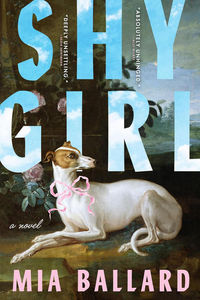
Traditional publishers have also recognized the profitability of AI, much like how many of them have now recognized the profitability of signing bestselling self-published authors, rather than cultivating submissions from their slush piles. In 2024, HarperCollins inked a deal with an unknown AI company to train their models on non-fiction books, and last year announced plans to use AI for translations, deciding to replace employees with tech. Regarding content creation, many readers contend that Silver Elite by Dani Francis (a pen name) was an AI-written novel, and that the Hachette-acquired book Shygirl by Mia Ballard was as well. 


As AI-generated books flood the market, I wonder when readers will no longer be able to tell whether a book was written by a large language model or by a human. I fear that day is soon. But even so, writing isn’t dead. Writers have and will continue to tell the stories closest to their hearts. We just have to look for them—and listen. And personally, quality over quantity not only matters most, but shows.


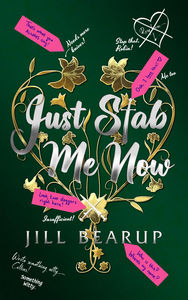
For example, Tomi Adeyemi signed a six-figure book and movie deal with Henry Holt and Co. (BYR), an imprint of Macmillan Publishers, for her first novel, Children of Blood and Bone. Jill Bearup has sold over 54,468 copies of her book Just Stab Me Now since its release in 2024, published by an independent press. Adeyemi wrote a West African-inspired YA fantasy, uncommon in 2018, and Bearup wrote a meta fantasy novel about an author’s characters acting out-of-character, a book no publisher knew how to sell. These two authors have done well in the publishing market because they chose to write deeply personal stories. 


When I feel I could be writing stories faster, or worse, that I’m not writing for market trends, I come back to my core beliefs and values: I don’t use AI for research, writing, or editing. The stories I write come from a part of me. Likewise, synthesizing what I hope to communicate to an audience during revisions is just as important to me as the final copy. All aspects of writing challenge me as a human, and as a reader, books do the same. 


What AI can’t do isn’t profitable. Maybe that’s a good thing.


As Western society pushes for more efficiency and higher profit margins, I continue to search for how to exist within this system. 


AI might be able to move me deeply as a reader, but it can’t expand my worldview. Anthropic recently settled a lawsuit over the illegal use of pirated books to train Claude, widely regarded as one of the better generative AI applications. Human experiences are not singular, and large language models can only replicate preexisting ideas. 


And thus, the greatest gift a writer can ever give a reader is the ability to think differently.


Catherine Mwitta has a bachelor’s in creative writing from Kwantlen Polytechnic University and a certification in Journalism from Langara College. She is an editor at Augur Magazine and INKspire. Likewise, bylines at Stir Vancouver, SAD Mag, This Magazine, C Magazine and Bluffs Monitor.


by Gillian Smith-Clark, ​for The 44 North, Editor in Chief


A chess set overexposed in pink, purple, and blue hues

What if the most radical act today is not to react, but to pause?

Chess is not just a game. It is an ancient philosophy of attention—a way I first learned to analyze the world from my father, who taught me to play as a young child. We’d sit together on the living room floor with a board and a beautifully carved chess set between us, as he guided me through the moves and the stories of each piece. Over the years, he used the game as a metaphor for life: patience, strategy, and the understanding that not every threat needs an immediate response. I stepped away from the game for many years but returned in 2016, when it proved to be an excellent anxiety reducer during the particular politics of that year. When the world feels like it’s moving too fast, I still turn to the board. It reminds me that wisdom often lies in the pause rather than the rush.


It asks for patience, wisdom, and the ability to think beyond the immediate move. The game rewards restraint, foresight, and the understanding that not every threat needs an immediate response; that the dramatic move is not always the wise one.


Lately, I have been reflecting on the discipline required to “play the long game” in both my own life and the world around us at this moment. We live in a time that rewards reaction: outrage is immediate, drama permeates the air in real time, and power is often performed through impulsiveness rather than judgment. But force without thoughtful strategy is not mastery; it is instability, chaos, and the erosion of our own judgment.


That feels especially true now. As war escalates between the United States, Israel, and Iran, and as political life in the U.S. continues to be shaped by bluster, performance, and short-term domination, it is hard not to notice the absence of genuine discipline on the global board. There is an added irony in watching Trump threaten to strike Iran “extremely hard” and send it “back to the Stone Ages” while appearing, once again, to misread the strategy of the very regime he claims to be overpowering. The lesson is clear: intelligence and power are not the same thing, and finesse—in politics as in life—is rarer than it should be.


At The 44 North, we are interested in something quieter yet more demanding: thoughtful attention, moral seriousness, and the long view. This issue reflects that commitment in different ways – from questions of gender and power to stories about surveillance, selfhood, and control. Again and again, the pieces in this issue ask what it means to remain clear-sighted in systems that would rather make us reactive, doubtful, or numb.


You’ll find that spirit in our review of Inter Alia, Suzie Miller’s play about the slow, cumulative violences that can unsettle even the most accomplished women in male-dominated spaces. You’ll find it in our latest Artist Spotlight featuring Capsule Community, and in this issue’s Writer’s Room selection, “On the OSAP Cuts: Could We Have Stratified the Cold?” You’ll find it, too, in the second- and third-place winners of our essay contest, which examine surveillance, optimization culture, and the erosion of inherent worth with urgency and intelligence.


This issue also includes Andrea Gibson’s powerful poem: “In the chemo room, I wear mittens made of ice so I don’t lose my fingernails. But I took a risk today to write this down.” Its title feels like its own kind of opening move: vulnerable, precise, and brave.


On the political side, we are pleased to feature work from Sylphia Basak and Cole Martin, whose pieces explore public anxieties around artificial intelligence and the geopolitical stakes of the Strait of Hormuz. More broadly, this issue also marks an exciting next step for The 44 North: the addition of a new team of political writers, including Basak and Martin, who will be contributing analysis and commentary between issues. At a time when public discourse is often flattened by speed, certainty, and outrage, we are proud to be making more space for political writing that is thoughtful, independent, and unafraid of complexity.


We are also happy to share that our newsletter has officially moved to Substack and is reborn as Points North: a place for field notes on culture, politics, and the world around us, alongside updates on our latest issue, podcast episodes, events, contests, and more. We hope you’ll join us there – not just to read, but to reflect, to question, and to play your own long game.


If chess teaches us anything worth carrying into daily life, it is this: patience is not weakness. Restraint is not retreat. To pause, to think carefully, to resist manipulation by headlines and noise—these are not acts of passivity, but of discipline. They are how we protect our judgment. And with it, our humanity.


Thank you, as always, for reading.


Warmly,

Gillian Smith-Clark

Editor in Chief, The 44 North Media


bottom of page